Unconventional/complex reservoirs

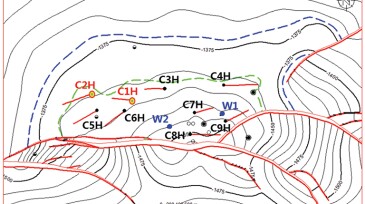
This work applies fuzzy logic, a well-established artificial-intelligence technique, to quantitatively assess connectivity between injectors and producers in a giant presalt field in the Santos Basin of Brazil.

Disposal wells remain the lowest-cost solution for produced water, but concerns over seismicity and long-term sustainability are accelerating interest in alternatives.

With a strong presence across US shale in the Bakken, Anadarko Basin, Powder River Basin, and the Permian, Continental Resources is expanding into Argentina’s Vaca Muerta shale as the privately held E&P giant pursues international growth.
-
 The paper describes an integrated work flow to apply autonomous inflow-control devices successfully in an offshore heavy-oil reservoir with significant uncertainty in remaining oil thickness and water/oil contacts.
 -
This paper details new technologies and work flows implemented for Australian offshore wells to improve drilling efficiency while managing associated risks.
-
The paper demonstrates the application of an interpretable machine-learning work flow using surface drilling data to identify fracable, brittle, and productive rock intervals along horizontal laterals in the Marcellus shale.
-
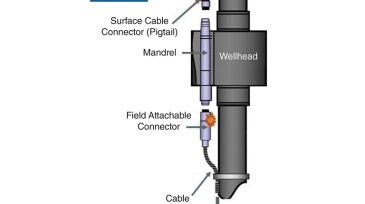
This paper describes the findings of a root-cause analysis of wellhead-penetrator failures in Canadian steam-assisted gravity-drainage operations and the mitigation measures taken.
-
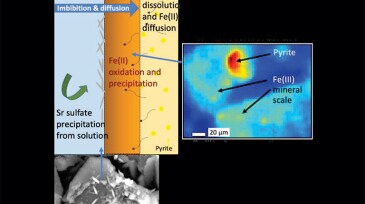
The obsession with better hydraulic fracturing has steadily pushed on shale production in year one, but the decline remains steep. Chemistry could help explain, and perhaps extend, the short productive life of these wells.
-
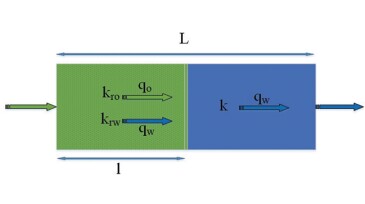
The authors develop and apply a laboratory protocol mimicking leakoff, shut-in, and flowback processes to evaluate the effects of fracturing-fluid additives on oil regained permeability.
-
Recent history has taught the unconventional sector that overly optimistic production forecasts can backfire. Going forward, one solution may be to combine financial and subsurface models to better communicate expectations.
-
Just as US natural gas prices reach multiyear highs, Chesapeake Energy moves to become this region's largest producer.
-
Incremental gains are not always celebrated, but as two of the biggest oil producers in the US show, they nonetheless can net unrealized savings and new efficiencies.
-
The combined company will have a strengthened position in the Permian Basin, and plans to operate 17 hydraulic fracturing fleets in the region.