Unconventional/complex reservoirs

This paper aims to establish a set of best practices for generating particle-size-distribution data from core samples.

This paper discusses the successful execution of two openhole gravel-pack completions in two Gulf of Mexico fields with depleted reservoirs.

By integrating experimental and mathematical modeling approaches, this work aims to advance the understanding of sand-detachment dynamics and formation instability under varying saturation conditions.
-
 Oil prices are up and so is the outlook for companies at the heart of the US unconventional oil sector, but they still have their concerns.
 -
The Norwegian oil company is exiting assets in North Dakota and Montana after a decade of development. A Houston-based private equity producer will take over the shale fields.
-
Russia’s Gazprom Neft Technologies is partnering with France’s SNF, the world’s largest maker of polyacrylamide, a polymer widely used in Chemical EOR. They aim to develop demand for chemical flooding technologies throughout Siberia.
-
The two-well stimulation approach is delivering big savings to first adopters. A new report from Rystad highlights how the development is taking shape.
-
In striving to boost production of shale gas and tight oil, China is trying enhanced-hydraulic-fracturing technology and real-time data analysis in the Sichuan shale basin. In Daqing’s tight-oil fields, an alternative fracture-completion strategy and post-stimulation flowback technology has been tested.
-
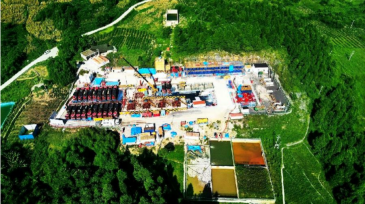
Sinopec is moving on to Phase 2 at its Weirong shale-gas development in Sichuan province after having completed Phase 1 by drilling 56 new wells over the past year and building new infrastructure to support increased natural gas production.
-
An investigation of casing damage led Chesapeake Energy and Well Data Labs to identify patterns in the treating pressure data that are useful markers when trouble is likely.
-
With only around 30 installations worldwide, ADNOC’s onshore team has seen enough results from its first “fishbone” stimulation to embark on a 10-well program that will decide a full development scheme.
-
During the past decade, hundreds of unconventional oil and gas projects have failed to deliver the value sought by shareholders.
-
The UAE produced 4 million B/D this year and is looking to these newly discovered resources to reach 5 million B/D by 2030.