Well intervention

Panelists at the SPE Subsea Well Intervention Symposium discussed where AI is delivering value today, where risks remain, and how engineers can best determine its usefulness.

With millions of wells having been drilled in the US since the beginning of the oil age, the land is pocked with old, unused wellbores. For most, repurposing is a pipe dream. Plugging is the best option.

This article from the SPE Research and Development Technical Section offers new insights to how the upstream industry can benefit from the emergence of quantum computing.
-
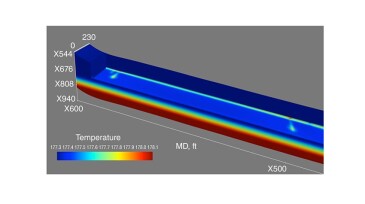
 This paper discusses the concept, applications, and continual evolution of a new 3D temperature and spectral-acoustics modeling and logging approach.
 -
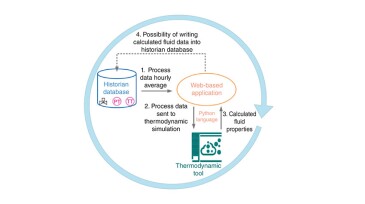
This paper presents various functionalities and benefits of a monitoring tool developed for and used with all critical flowmeters in the operator’s production system.
-
New and evolving artificial lift technology is helping operators improve production rates.
-
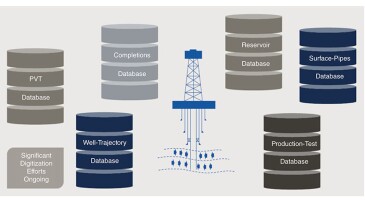
This paper describes the development of a comprehensive digital solution for well surveillance and field-production optimization for an offshore field consisting of four stacked reservoirs, each containing near-critical fluids.
-
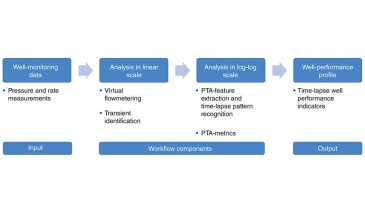
This paper describes a new integrated workflow for automated well monitoring using pressure and rate measurements obtained with permanent gauges and flowmeters.
-
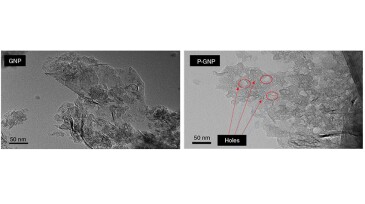
This study proposes graphene nanoplatelets as a preflush system to extend the lifetime of a conventional scale-inhibitor squeeze treatment.
-
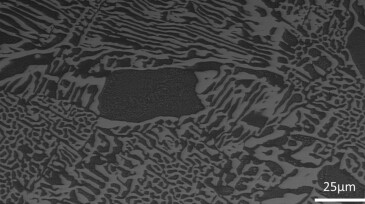
A comprehensive study looks at the sealing efficiency of eutectic bismuth-tin alloy plugs in wells slated for plugging and abandonment through laboratory testing, microscopy analyses, and numerical simulations.
-
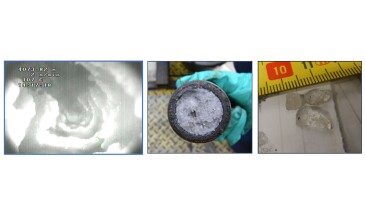
This paper describes a solution for downhole salt precipitation involving the installation of velocity strings.
-
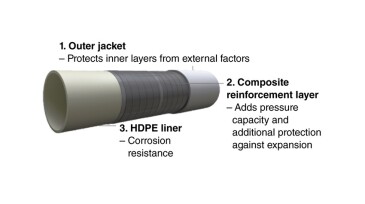
This paper discusses the ecosystem challenges that face the development of nonmetallic tubulars, ranging from academia and research institutes to material suppliers and manufacturing facilities for pipe prototyping.
-
This paper discusses the benefits of glass-reinforced-epoxy-lined carbon steel for tubulars, which provides long-lasting protection resulting in major cost savings throughout the life cycle.