Testing page for app
-
 This paper describes the first successful attempt on the continental shelf offshore UK to map carbon dioxide (CO2) in real time while logging during a drilling campaign in the East Irish Sea.
-
In this paper, a strategy for designing a novel small-molecule CO2 thickener is detailed.
-
This paper investigates the use of gelling CO2/water emulsions, stabilized by silica nanoparticles, to control the mobility of CO2.
-
This study presents experimental results on the use of carbon dioxide (CO2) as an enhanced-oil-recovery (EOR) agent in preserved, rotary sidewall reservoir core samples with negligible permeability.
-
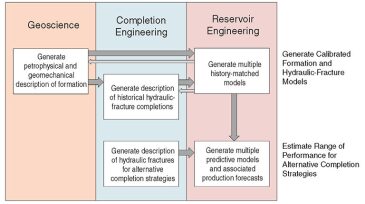
This paper presents a pragmatic integrated work flow used to optimize development and guide critical development decisions in the Black Hawk field.
-
The mass of carbon dioxide (CO<sub>2</sub>) use for enhanced oil recovery (EOR) and of the subsequent oil produced has continued to increase almost every year for more than 40 years.
-
This paper discusses fracture stimulation in the first joint-venture shale-gas project with foreign companies in China.
-
In 2010, exploration of gas-rich and possibly liquid-rich shale reservoirs began in northern Mexico. A two-stage integrated workflow was developed to achieve set objectives.
-
When discussing dual-gradient drilling, there is an important distinction between controlling wells and well control.
-
Dual-gradient drilling covers a variety of methods for managing pressure within an offshore well while drilling. Dual refers to systems built to reduce or eliminate the pressure added by drilling fluid in the riser. The goal is to create distinct pressure gradients above and below the mudline.