

Latest News
-
 This paper details a gravel packing operation in the Martin Linge field in the North Sea that marks the highest density carrier fluid openhole gravel pack completed successfully worldwide, setting a new standard for well completions in challenging high-pressure environments.
 -
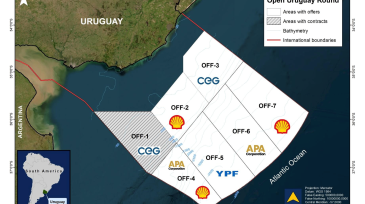
The supermajor will gain a 60% working interest and assume operatorship in the AREA OFF-1 block.
-
The company says it has used more than 30 AI tools to unlocked significant value across its full value chain.
-
The tie between US crude output and key indicators such as rig counts and the number of new wells has significantly weakened.
-
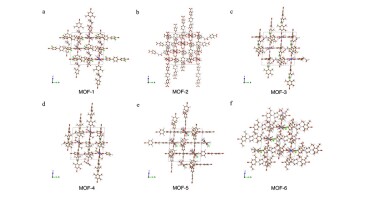
Artificial intelligence is increasingly being used to assist in the development of materials, including metal-organic frameworks (MOFs), to advance carbon capture technologies. Researchers assembled more than 120,000 new MOF candidates within 30 minutes.
-
Early adopters of large language models praise the technology’s promise to advance upstream research and software development while also offering cautionary notes.
-
This paper describes how near-real-time tracer data from the onsite tracer analysis enabled the operator of the Nova field to interactively optimize two well cleanups.
-
This work provides a new modeling tool, validated against a static-wellbore solver and field data, to estimate and manage downhole temperature in higher-temperature oil, gas, and geothermal wells.
-
Slickline-Deployed Fiber-Optic Cable Provides First Production Profile for High-Temperature Gas WellThis paper describes a case study in which, in the absence of a conventional production log, distributed fiber-optic sensing, in conjunction with shut-in temperature measurements, provided a viable method to derive inflow zonal distribution.
-
This paper discusses and evaluates retrofitting abandoned petroleum wells for geothermal applications as a commonly proposed solution to meet the challenge of the capital expenditure required for drilling and completion.
-
This paper presents an approach using artificial neural networks to predict the discharge pressure of electrical submersible pumps.
-
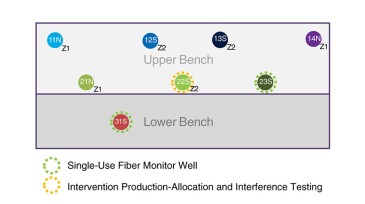
The authors integrated azimuths and intensities recorded by fiber optics and compared them with post-flowback production-allocation and interference testing to identify areas of conductive fractures and offset-well communication.



Explore Content by Discipline
Trending Content



Get JPT articles in your LinkedIn feed and stay current with oil and gas news and technology.