

Monthly Features
-
 Drilling experts recently shared candid views on what will be required for their segment of the upstream business to move to the next stage of development.
 -
 EQT is benchmarking its way to basin-leading productivity and relying on partnerships and new technology to turn KPIs into operational reality.
 -
 This case study from Italian technology developer Sentris highlights the effectiveness of using sensors during pigging operations to optimize cleaning efficiency.
 -
 Experts and industry leaders gathered in The Woodlands, Texas, recently to sift through the challenges of carbon capture, utilization, and storage. The puzzle is coming together, but some critical pieces are still needed before the results look like the picture on the box.
 -
 Two examples from ONGC show how supervised AI-driven automation scaled well modeling across hundreds of offshore wells, saving more than 1,000 engineering hours.
 -
 Examples demonstrate how an Integrated Operations Center as a Service (IOCaaS) model, powered by artificial intelligence, reduced costs by 5% and increased production by 6% in Canada.
-
 The standard for progress in shale development has been the drastic reduction in the number of days needed to drill a well, from more than 20 to less than 5 in some unconventional plays. But some question whether it has become a misleading metric for an industry needing more productive wells.
 -
The only wells that are straight or follow a smooth curve are in the pictures in well plans. Real wellbores are shaped by the mechanics of directional drilling tools, the skills and attention of drillers, the force of gravity, and the path followed by hydrocarbon-rich seams of rock.
-
In SPE's annual salary survey, average total compensation dropped back to 2013 levels after an increase last year. Nonetheless, more than half of respondents reported that their base pay increased in 2015.
-
While the collapse in oil price is reshaping opinions about the North American shale revolution and the outlook for oil producers, natural gas producers in the United States are in a somewhat different position
-
The word “broadband” is used to sell a lot of what is new in offshore seismic. It can mean different things depending on who is speaking.
-
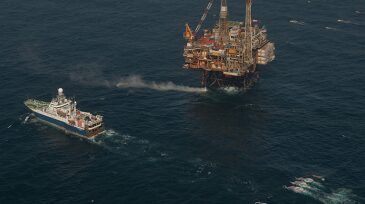
Companies are using an increasing number of sound shots to gather more data in a shorter time frame.
-
Developing the Mad Dog discovery appeared to be high-risk because of the difficulty in mapping the subsurface because of the thick layer of salt underlying the region.
-
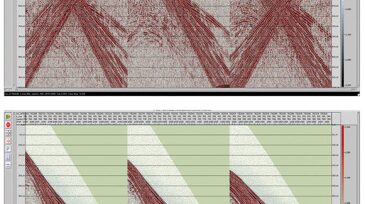
New seismic data gathering techniques promise better images for less by gathering more data quicker, seeing past obstructions, and seeking out scarce frequencies.
-
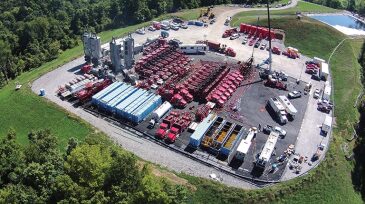
A panel of experts says US shale producers need to rethink their drilling and completion designs as problems mount for horizontal wells when they go on pump. Hanging in the balance is whether long-term production from many shale wells will be achievable.
-
Sustained low oil prices have not yet had a significant effect on many universities’ research and development programs. For now, money allocated by the oil and gas industry in previous years is still available for many institutions.






Explore Content by Discipline
Power Up With JPT Newsletters
JPT Newsletter (Weekly).
All the top stories, trends, and tech.
JPT Unconventional Insights (Monthly).
Fresh takes on shale and tight oil.
Get JPT articles in your LinkedIn feed and stay current with oil and gas news and technology.