gas lift
-
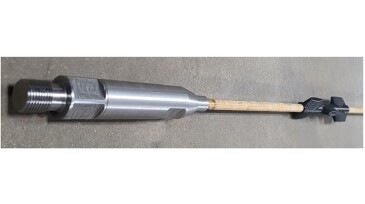
 This paper explores the development of fiber-reinforced thermoplastic sucker rods as a promising alternative for overcoming the limitations of steel sucker rods and thermoset fiberglass sucker rods.
 -
Machine learning is refining gas lift production optimization with scalable automated workflow.
-
This paper discusses a new type of mechanical gas separator for electrical submersible pump systems that increases operating flow range and separation efficiency while decreasing erosion problems and improving reliability.
-
This paper presents an approach using artificial neural networks to predict the discharge pressure of electrical submersible pumps.
-
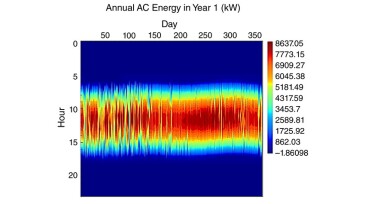
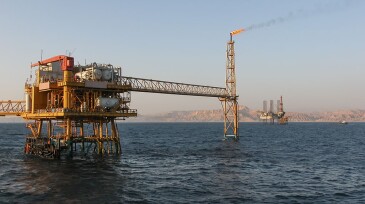
This paper aims to analyze the relevance of wind and solar energy for the supply of artificial lift systems on offshore platforms in the Brazilian equatorial region.
-
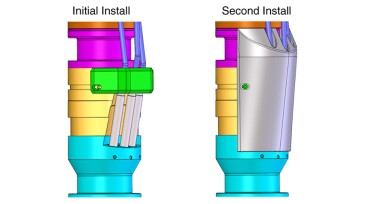
This paper explores electrical submersible generator design considerations, theoretical underpinnings, and potential future applications.
-
The authors of this paper discuss the effectiveness of smaller port sizes and the use of dummy and Venturi valves to enhance gas lift performance and maximize recovery in mature offshore fields.
-
The authors of this paper present an artificial-lift timing and selection work flow using a hybrid data-driven and physics-based approach that incorporates routinely available pressure/volume/temperature, rate, and pressure information.
-
As production dynamics evolve over the full life cycle of a tight-oil play, a single artificial lift method may not be the most cost-effective solution.
-
The authors describe a hybrid gas-lift/rod-pump completion designed to reduce workover rig cost and production deferment and increase production efficiency in high-gas/oil-ratio environments in marginal fields.