Completions

Industry experts at URTeC assessed more than a decade of unconventional growth while discussing where productivity gains will come from next.

Chevron and Halliburton describe how they built and deployed the fully autonomous closed-loop fracturing system that enables subsurface-driven optimization.

Weatherford CEO Girish K. Saligram said the acquisition will bolster Weatherford’s completions offerings and unconventional reservoir capabilities.
-
 Kerogen Exploration is excited about the Vista Grande project, a Woodford Shale play in a west-Texas Permian sub-basin that offers further targets lying above in the Barnett Shale.
 -
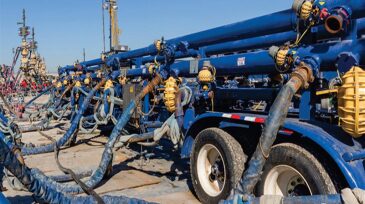
A new spread of stimulation equipment from the world’s largest service company demonstrates the latest significant step to creating a more automated oilfield.
-
Deepwater operators continually face technical and environmental challenges to drilling and completing wells safely and efficiently.
-
The industry has developed a deep and healthy respect for systems-engineering processes and the associated full considerations during the deployment of new technologies. The result has been a significant improvement in the successful use and broader deployment of these attractive technologies.
-
This paper focuses on the application of radio-frequency-identification technology to enable an operator to eliminate an intervention run (or intermediate liner) for a 10,000-ft reservoir section.
-
In North America’s most active shale fields, the drilling and hydraulic fracturing of new wells is directly placing older adjacent wells at risk of suffering a premature decline in oil and gas production.
-
A closer look at technological and mechanical solutions being developed to limit exposure to respirable silica dust during hydraulic fracturing operations in the wake of US government regulations.
-
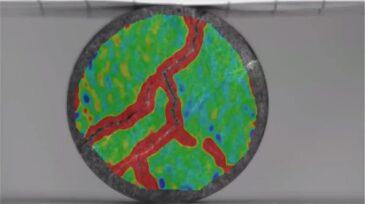
Technology that allows researchers to see stress forming inside rock samples may help unravel some of the mysteries associated with fracture behavior.
-
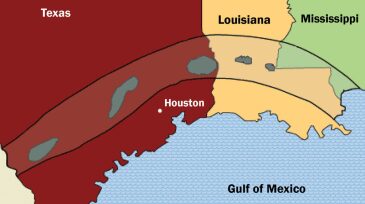
The Austin Chalk play could go through a revival if the industry can view the formation through “a fresh set of eyes,” says EnerVest’s Tony Maranto.
-
Early testing suggests that grains of proppant so small they need to be measured in microns can add production by slowing the notoriously rapid declines in unconventional wells.