Completions

Three papers are highlighted as the primary contributions because of their broad industry relevance. They focus on improving formation particle-size characterization, expanding the application of openhole gravel packs in depleted and compartmentalized reservoirs, and advancing the understanding of capillary pressure in sand production.

This paper aims to establish a set of best practices for generating particle-size-distribution data from core samples.

This paper discusses the successful execution of two openhole gravel-pack completions in two Gulf of Mexico fields with depleted reservoirs.
-
 The investment group Wilks Brothers, now owners of Carbo Ceramics, has sought stakes in other OFS companies this year.
 -
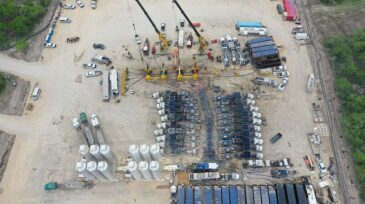
Why stimulate horizontal wells one by one when they can be done two at a time? The largest pressure-pumping company in the business says it might even be possible to complete three wells at once.
-
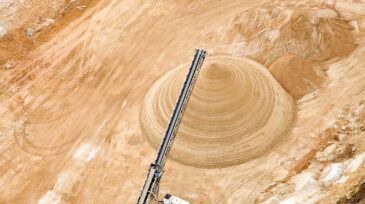
The contraction of the shale sector and its operations such as drilling and completions due to COVID-19 and the drop in oil price has sifted down to the frac sand suppliers.
-
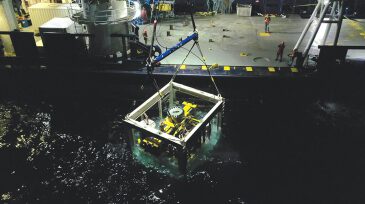
A lot about the blowout preventers used for offshore drilling has changed since Macondo in 2010, but the essentials remain. This evolution serves as a case study on why some oilfield technology is hard to change.
-
In an era where capital markets are hitting the brakes on funding the US shale sector, operators have increasingly pivoted from production growth to maximizing the rates of return via lower-cost wells.
-
Carbon dioxide (CO2) waterless fracturing uses liquid CO2 to replace water as the fracturing fluid in reservoir stimulation. The continuity and reliability of the blender are key factors determining performance of the operation.
-
New report offers guidelines for pressure pumpers of the future.
-
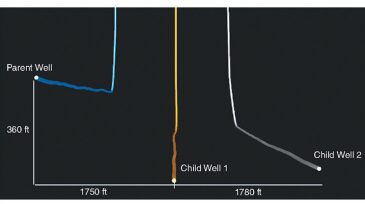
As wells across the US shale sector are brought back onto production, they may want to do so strategically to learn about the connectivity of their wells. One challenge will be in selecting a model that delivers the most insight.
-
Developed by the large shale producer, its new way to monitor interactions between horizontal wells is now available as a commercial software. The concept is considered a stepping stone toward real-time fracture design.
-
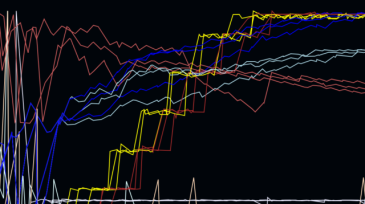
The new software enables high-resolution, real-time fracture-stage data to be shown on top of multiple previous stages to visualize optimized performance or to be tracked against an ideal preset stage.