Data & Analytics
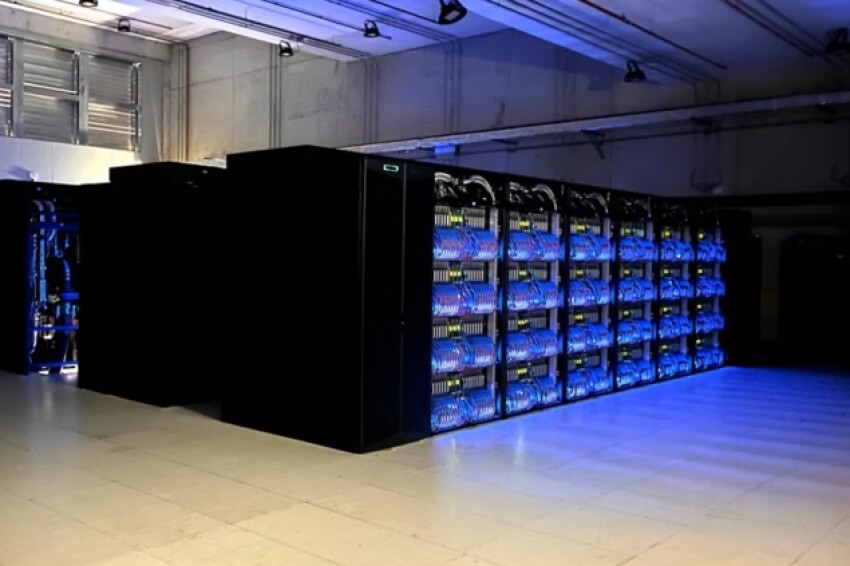
With the latest addition, the Italian major’s computational capacity passes the exaflop threshold, making the firm the world’s leading company by computing power in the new TOP500 global ranking.

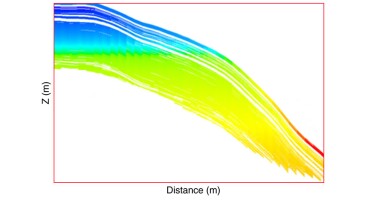
This work describes a study in which distributed data parallel training, paired with a node-local caching pipeline, enabled efficient multigraphics-processing-unit scaling for a CO₂-storage graph-neural-network surrogate while maintaining generalization.

This paper presents a novel reservoir engineering/reservoir simulation approach—a data-driven interwell-connectivity model augmented as a digital twin—to predict reservoir dynamics and optimize operations in the Changqing oil field of China.
-
 Automated workflow unifies geological, completion, and production data to inform speedier, better investment decisions for nonoperated assets.
 -
Digital transformation presents a crucial opportunity to cut costs across business domains. This review explores unique digital transformation opportunities in the petroleum industry, highlighting valuable business process automations that can drive significant benefits.
-
The oil and gas industry can leverage advanced AI and generative AI to bridge knowledge gaps, enhance decision making, and improve safety. These tools will boost efficiency and productivity, leading to a smarter and more resilient industry.
-
Both new and old vessels are benefiting from automation processes that can improve operational efficiency, predict downtime, and debottleneck workflows using a flurry of crucial data points.
-
The authors of this paper review the advantages of machine learning in complex compositional reservoir simulations to determine fluid properties such as critical temperature and saturation pressure.
-
A seismic prediction model is developed and presented in a case study to simulate the magnitude and timing of triggered seismic events with the intent to manage and mitigate environmental impacts resulting from induced seismicity during subsurface development activities.
-
Operators tell an audience at the Unconventional Resources Technology Conference how a hybrid expandable liner system and machine-learning-based analysis improve the bottom line.
-
This paper presents efforts to reduce greenhouse-gas emissions and increase energy efficiency through the use of a real-time monitoring tool on exploration and production operated assets.
-
Machine learning is refining gas lift production optimization with scalable automated workflow.
-
The Permian’s produced-water challenge presents an opportunity for innovation to pave the way toward a more sustainable future for the industry.