Decarbonization

This paper presents a flexible, highly cost- and energy-efficient method of gas separation and CO₂ capture from many different gas mixtures with a large range of CO₂ concentrations.

This paper presents an approach for safe, efficient, and cost-effective legacy well reabandonment.

This study explores the carbon-capture and mineralization potential of ultramafic rock powders when exposed to flue gases generated from combustion of crude oil and mesquite-derived charcoal.
-
 Paving the way for collaboration, the fourth edition of the SPE Symposium on CCUS management witnessed groundbreaking discussions on innovative strategies and initiatives that accelerate the deployment of CCS and CCUS projects in the region.
 -
Several projects have been scrapped across the US as inflation causes project costs to soar, while projects in Costa Rica and Rotterdam move forward.
-
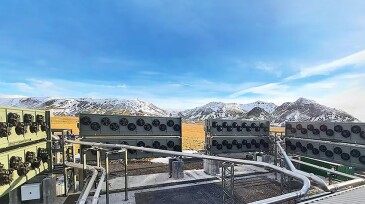
New York-based BlackRock will put more than half a billion dollars into Occidental's first direct air capture project, which is now 30% completed.
-
In the US, localized opposition and regulatory uncertainty are threatening to kill or severely limit the use of carbon capture, use, and storage (CCUS) in the fight against climate change.
-
In this paper, the authors evaluate the simultaneous optimization of CO2 storage and oil recovery using multiple injection strategies.
-
As money pours into the space, questions arise about whether the method of removing carbon from the atmosphere is the best investment.
-
An increased focus on energy security and the effects of progressive policies and gridlock in decarbonization technology are a few of the key takeaways in DNV’s 2023 Energy Transition Outlook.
-
ADNOC's Ruwais LNG to be one of the first all-electric-LNG facilities in the Middle East.
-
The work scope for the project runs through year-end 2027.
-
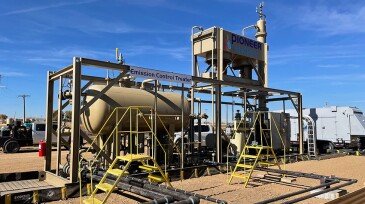
A new type of skid-mounted production facility was deployed on a pad in Weld County, Colorado, and demonstrated elimination of emissions, improved operational efficiency, and an increased crude yield of 11.3%.