Drilling automation
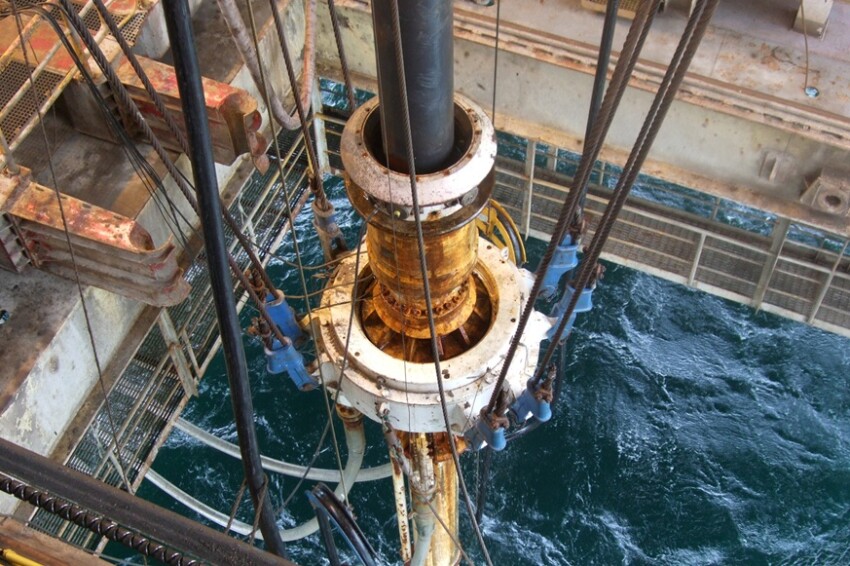
This study explores the use of autoencoder models with convolutional neural networks to present a framework and prototype for early and accurate kick detection during offshore oilwell drilling.

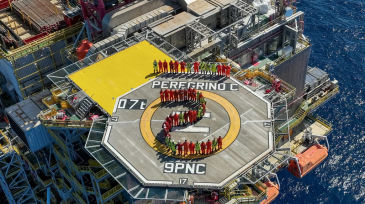
This paper presents the first global application of autonomous drilling in deepwater and the journey to reach optimal drilling parameters, integrating proprietary tools from the project’s business partners.

Drilling experts recently shared candid views on what will be required for their segment of the upstream business to move to the next stage of development.
-
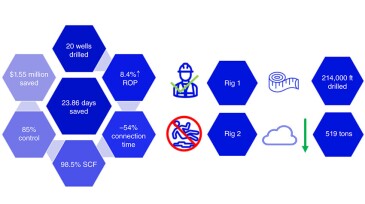
 The authors of this paper present the results of implementing a rig-automation solution applied to 20 wells in Ecuador in 2022.
 -
The oilfield service giant said it has taken another big step toward fully autonomous drilling operations in its latest project offshore Brazil.
-
The companies have integrated their platforms in an effort to increase flexibility and interoperability.
-
Few oil and gas companies give data science projects the better part of a decade to prove out, but that’s just what this one did.
-
This paper describes an 18-month intensive continuous improvement process between an operator, a rig contractor, and bottomhole-assembly (BHA) service providers aimed at reducing BHAs per well in two Oklahoma rigs.
-
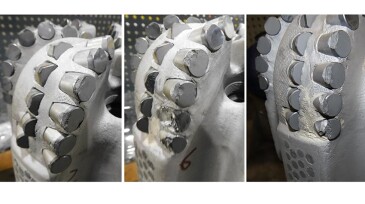
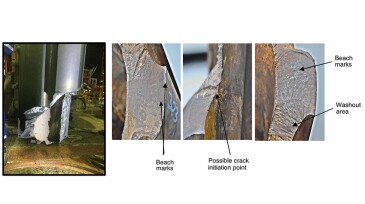
This paper presents the study, resulting recommendations, and a proposed change in standard bottomhole-assembly configurations to reduce service-quality-compromising incidents and productive time lost from jar twistoffs.
-
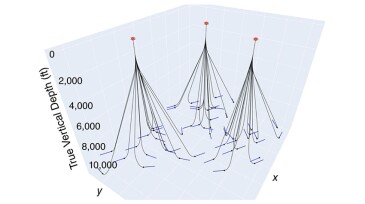
This paper presents an approach to optimize the location of wellhead towers using an algorithm based on multiple parameters related to well cost.
-
This paper describes the application of learnings from an offshore project in the Caspian to an underground gas storage project to enhance drilling performance.
-
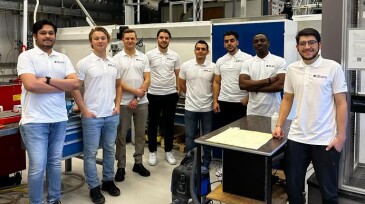
The winners of this year’s Drillbotics competition are teams from the University of Stavanger and Clausthal University of Technology. Thirteen teams registered last fall, coming from seven countries spanning four continents.
-
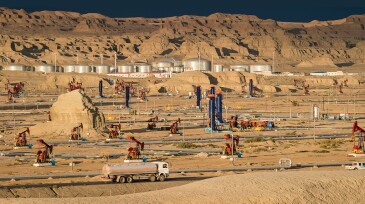
CNPC’s record-breaking 11,100-m exploration borehole in the Taklamakan Desert promises to unlock the science of producing oil and gas trapped in the world’s deepest reservoirs.