Drilling

This paper aims to establish a set of best practices for generating particle-size-distribution data from core samples.

This paper discusses the successful execution of two openhole gravel-pack completions in two Gulf of Mexico fields with depleted reservoirs.

This edition highlights three offshore technology papers that address a common industry theme: how targeted engineering solutions can reduce uncertainty, shorten operations, and make technically constrained offshore well activities more executable.
-
 The most common method used for the placement of cement plugs is the balanced-plug method using drillpipe, tubing, or a combination of both.
 -
Many good well-construction-technology papers came out last year, as well as a couple on older technologies that either had not been published earlier or had been released and were underappreciated.
-
This paper presents the results of a performance-improvement effort in extended-reach drilling (ERD) in three campaigns in the Huizhou HZ 25-4 oil field in the South China Sea.
-
The vision of fully automated drilling rigs driven by big data gathered in real time looks so far off but there are people working on a road map to help the oil and gas industry find its way there some day.
-
This paper introduces a fit-for-purpose surface-controlled formation-isolation valve (SFIV) designed for the temporary well suspension required for this strategy.
-
For companies working to maximize production and profits, one of the biggest questions has been, and continues to be, how manyu wells to drill per square mile.
-
Despite a short 18-month planning time and very limited geological data, the TTD-1 high-pressure/high-temperature (HP/HT) exploration well in East Malaysia’s Block SK was drilled successfully.
-
The simplest way to measure return on investment for an offshore water treatment system is to determine whether using the system actually reduces the risk of paying a fine for violating water pollution laws.
-
A common well-completion configuration for shale-gas wells is a horizontal well with multiple transverse hydraulic fractures.
-
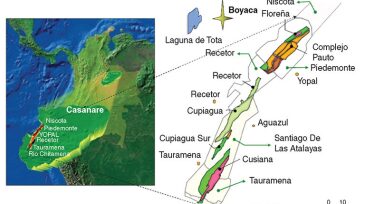
This paper describes the evaluation of a nanofluid containing nanomaterials with high adsorption capacity used for asphaltene inhibition in the volatile Cupiagua Sur oil field in Colombia.