

MPD/UBD

As managed pressure drilling gains traction, its principles are influencing a wider range of well-construction activities.

A report commissioned by Havtil, the Norwegian Ocean Industry Authority, calls for better dialogue regarding pore-pressure uncertainty and higher-end drilling techniques like managed pressure drilling as methods to reduce the risk of well-control events.
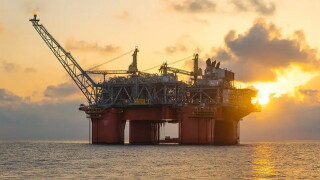
Autonomous drilling through managed pressure drilling (MPD) at the Atlantis field has given the operator confidence to scale the method.
-
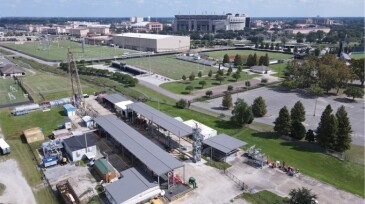
 For more than a century, LSU has shaped petroleum engineering education, but few assets showcase its impact like the PERTT Lab. With six deep test wells and rare reservoir-depth gas-injection capabilities, the facility is helping drive breakthroughs in well control, carbon-dioxide injection, and next-generation energy technologies.
 -
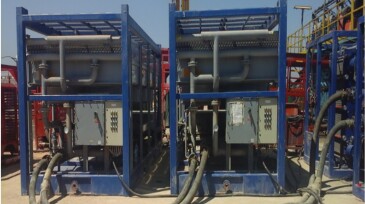
This paper reviews the successful application of a mud-cooling and managed-pressure-drilling system in a high-pressure/high-temperature well to explore the potential of a Mesozoic carbonate platform in the Nile Delta of Egypt.
-
Managed-pressure drilling has been associated as a technology used only on problematic wells and only as a last resort. However, when integrated at the beginning of operations as part of a comprehensive well plan, it becomes a performance-enhancing solution for any type of well classification, including development, directional, multilaterals, and horizontals.
-
This paper describes the path to implementation of full casing rotation during primary cementing jobs.
-
MPD was used to successfully drill through a pore pressure ramp and address a well-control event in conjunction with conventional methods.
-
Digitalization and automation successes are here to stay. Instead of making small incremental steps in well construction operations, allowing disruptive shifts can lead to tangible performance gains in efficiency, safety, and well integrity.
-
Discussed are real-world examples of the less often considered but valuable environmental benefits delivered via MPD.
-
This paper presents lessons learned regarding design, testing, and installation of a completely integrated managed-pressure-drilling (MPD) control system on a deepwater drilling rig.
-
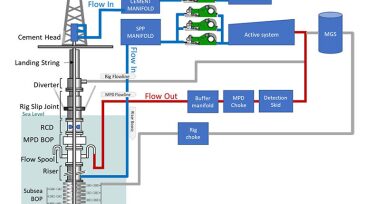
This paper presents the design considerations, methodology, and results of two deepwater MPC operations conducted to cement production casing strings within a target operating window of approximately three-tenths of a pound.
-
This work focuses on the development of specific methodologies to support managed-pressure-dilling (MPD) operations implemented on real-time diagnostic software.

Page 1 of 5