

Oilfield chemistry

This paper presents an experiment investigating dissolution of basaltic primary minerals and conditions favorable for secondary phase formation under deep subsurface storage conditions.

This study aims to investigate the efficacy of chemical additives strontium chloride and barium hydroxide in accelerating CO₂ trapping mechanisms, their effect on dissolution of carbonate-bearing minerals, and resulting poroelastic changes in the host rock.

This study reviews subsurface microbial activity, biomineralization reactions, and mechanisms prevalent for bioremediating wells, stabilizing cements, and increasing trapping during CO₂ injection and storage.
-
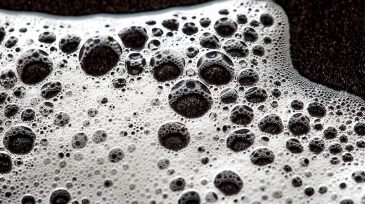
 A relatively small concentration of a defoamer can have a significant impact on the dynamics of multiphase flow within a pipe, but the effect is generally temporary.
 -
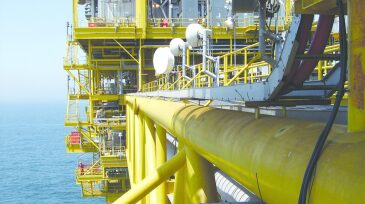
As producers push logistical and technological limits to operate in deeper water and more remote locations, maintaining and repairing offshore structures can present a number of challenges unique to these environments. One of the costliest is corrosion.
-
As the world's supply of crude becomes heavier, many of the world’s oil producers will have to think more carefully about heavy crudes and the challenges they pose for processing, storage, and transportation.
-
In an SPE webinar, “Foaming in Separators: Handling and Operation,” Wally Georgie, principal consultant at Maxoil Solutions, presented an overview of foam generation and how the design of processes and chemical management can exacerbate its detrimental effects in separators.
-
Issues associated with mercury’s presence in hydrocarbon processing systems have become more apparent as deeper and hotter reservoirs (often with higher levels of mercury) were exploited, and with the low-temperature gas processing used for liquefied natural gas (LNG) and natural gas liquids.
-
Semoga and Kaji fields experienced reservoir souring and suffered a history of calcium-carbonate (CaCO3) -scale cases before a proper scale-inhibition program was implemented. Problems with a free water knockout discovered continued scale issues, leading to investigation of the reasons.
-
The high level of dissolved iron commonly present in the Marcellus waters of Pennsylvania and West Virginia adversely affects the ability of scale inhibitor to inhibit calcium carbonate scale. This study tests two new products under a range of conditions.
-
Higher oil prices has created increased interest in chemical enhanced oil recovery (CEOR) using polymers, surfactants, and alkalis. This technology poses some special challenges, especially around water treatment.
-
Offshore production systems can be impacted negatively by numerous problems attributed to bacterial activity, associated hydrogen sulfide and biogenic iron sulfides, and mercaptan production. Acrolein provides a distinctive all-in-one chemical solution to assist in resolving these problems.




Page 15 of 16