Onshore/Offshore Facilities
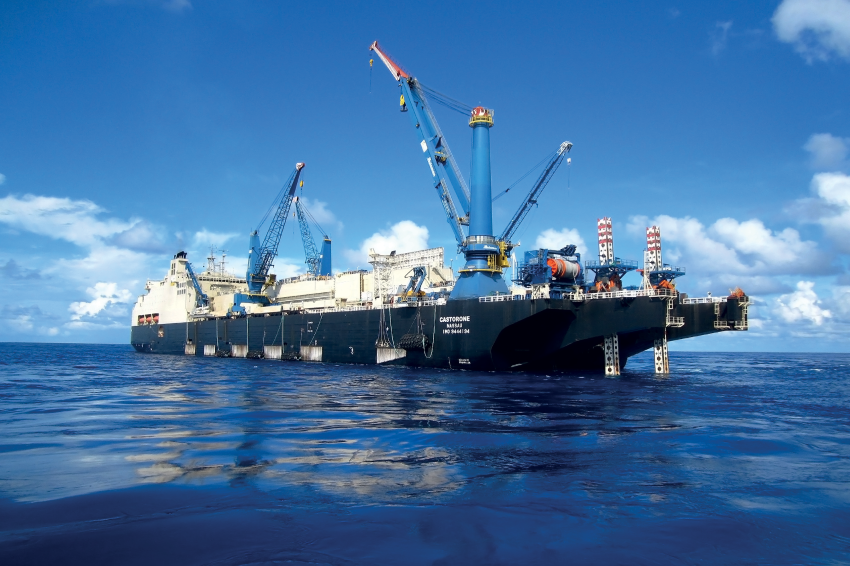
The $5.1 billion ultradeepwater project is Angola’s first integrated cross-block development and sits at the top of Azule’s Southern African portfolio.

Equinor and its partners’ investment in the Troll West Increased Gas Recovery North (TWIN) project aims to unlock around 11 Bcm of additional natural gas from the Troll field, with first production targeted as early as 2028.

The US supermajor will use Permian Basin natural gas to support the hyperscaler’s AI business.
-
 The Nasr-115 expansion project, within ADNOC’s larger Ghasha concession, is part of a development aimed at increasing capacity to 115,000 BOPD by 2027.
 -
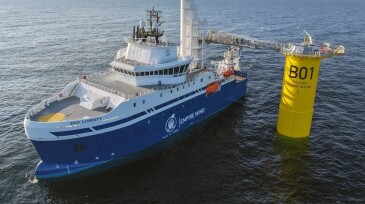
The project, which is owned and run by Equinor offshore New York, is more than 60% complete.
-
Malampaya East discovery is estimated to hold 98 Bcf of gas and may help offset declines at the country’s only producing gas field.
-
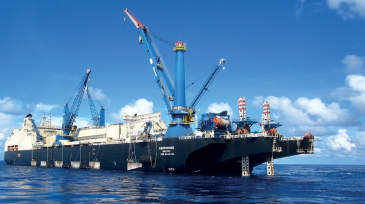
The vessel, ordered by Eni, is expected to double LNG production at Eni’s project offshore Mozambique to 7 mtpa when it goes online in 2028.
-
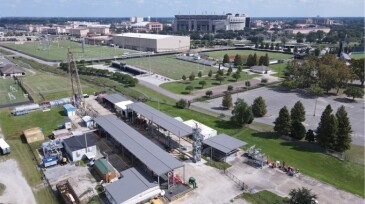
For more than a century, LSU has shaped petroleum engineering education, but few assets showcase its impact like the PERTT Lab. With six deep test wells and rare reservoir-depth gas-injection capabilities, the facility is helping drive breakthroughs in well control, carbon-dioxide injection, and next-generation energy technologies.
-
Woodside’s $12-billion gas project offshore Western Australia is expected to produce up to 8 mtpa once it’s complete.
-
The London-headquartered independent acquires position in the US Gulf while preparing Zama for final investment decision.
-
The Norwegian major said it is using artificial intelligence for predictive maintenance throughout its facilities and for interpretation of seismic data from the Norwegian continental shelf.
-
Engineering, procurement, construction, and installation awards made at the end of 2025 are expanding Saipem’s role in Turkey’s two largest offshore gas fields, plus Saudi Arabia’s Berri, Abu Safah, and Marjan oil fields and Qatar’s North Field gas giant in the Persian Gulf.
-
Following a US military operation to arrest Venezuela’s president, analysts say there is no easy fix for the country’s beleaguered upstream sector.