Production

Unlike traditional AI approaches that rely primarily on historical data, physics-based AI integrates physical laws, engineering expertise, and operational constraints directly into the learning process. Three recent SPE papers illustrate how this paradigm is transforming the industry through intelligent condition monitoring, virtual sensing, and autonomous production …

This research focuses on combining physics-based expert rules with machine learning to improve the detection of failure-related events in electrical submersible pumps.

A combination of physics principles and machine-learning techniques is used in this work to develop a virtual flowmeter for oil-production optimization in electrical-submersible-pump-lifted oil wells, resulting in reliable generalization.
-
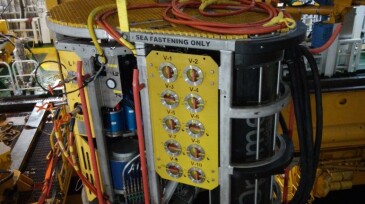
 The contractor will supply subsea equipment for the Brazilian state oil company’s Marlim, Voador field revitalization project.
 -
The way gas injection is used to lift oil and water to the surface needs to change because better control and data may mean more production. At a time when engineers are managing so many wells, they need help from machines.
-
Getting more out of gas lift requires understanding how gas injections interact with the oil, water, and gas flowing up the well—in other words, multiphase flow. Some papers are listed to get you started.
-
Country’s president expects 10 additional wells in its waters this year.
-
Forecast sees 12% boost in the region’s crude production by the end of 2022.
-
The service giant and a technology developer from Norway seek to create a broader market for two technologies aimed at lowering topside footprints and improved operational efficiency.
-
Production has been hampered by subsurface issues most of the year. Gas production fell below the technical threshold of the offshore gas processing plant.
-
New Sarta field well brings gross field production over 10,000 B/D of oil.
-
The world's largest oil company has taken its lumps from 2020 and is ready to look forward to higher oil demand and the coming of a hydrogen market.
-
Economical oil extraction depends largely on reducing wear and tear of downhole equipment and tubulars through regular monitoring and batch treatment to cut the risk of corrosion and costly workovers. Having a data-driven approach to scheduling batch treatment can bring down the frequency of treatment and avoid the unnecessary use of resources.