R&D/innovation

A shared digital mindset across subsurface, subsea, and drilling and wells is accelerating well planning at Vår Energi.

With funding opportunities improving, developers and researchers are focused on shortening project learning cycles and reducing uncertainty to attract more capital and speed deployment.

The US Department of Energy has awarded more than $99 million to 21 projects that will advance geothermal development through field-scale testing of next-generation technologies and exploration drilling programs across the US.
-
 A 2-day event in Houston will bring together investors, entrepreneurs, and innovators from the oil and gas industry to discuss trends and pitch ideas.
 -
My goal is to support small producers and tech providers. Cautionary note: If you work for a huge corporation and feel there is no need for little, pesky innovators, please stop reading this article now.
-
The future of unconventional exploration will require a break from the status quo. With well productivity stalling, it is time to look for a new plan of attack.
-
Startup company Eviation is aiming for its 9-seat commuter aircraft to be flying passengers by 2021 after signing up South Korea’s Kokam as its battery supplier. The battery will have 9,400 cells distributed throughout the aircraft including the ceiling, floor, and wings, weighing 3.8 tonnes, or 60% of the maximum takeoff weight.
-
Siemens and GE are among the companies discovering the power of an open-source innovation community to offer solutions for significant oil and gas industry challenges, such as improved corrosion monitoring.
-
The Technology Roadmap identifies R&D opportunities that will allow the US to be the leading producer of oil and gas into the future. The importance of technology transfer and time to commercialization is discussed.
-
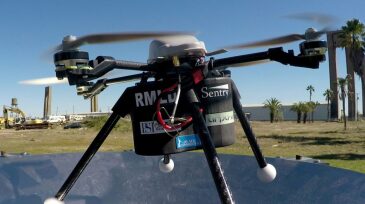
A US-government-sponsored program is putting new methane leak detection systems to the test with a goal of achieving functionality costs of $3,000/year/wellsite while hitting stringent performance criteria.
-
R&D is essential for the industry, regardless of the current oil price, and past down markets have spawned some key technology advances, ExxonMobil researcher Erika Biediger told the SPE Gulf Coast Section R&D study group recently.
-
The president of Chevron Technology Ventures discussed how startup companies can fill the gaps in a rapidly changing technological ecosystem, and Chevron's mechanisms to understand the role startups can play in its operations.
-
Veros Systems took top honors at a competition involving energy startups.