Reservoir characterization

Known as Arena, the collaboration aims to improve decision-making across increasingly complex reservoirs and growing volumes of subsurface data.

Three papers are highlighted as the primary contributions because of their broad industry relevance. They focus on improving formation particle-size characterization, expanding the application of openhole gravel packs in depleted and compartmentalized reservoirs, and advancing the understanding of capillary pressure in sand production.

By integrating experimental and mathematical modeling approaches, this work aims to advance the understanding of sand-detachment dynamics and formation instability under varying saturation conditions.
-
 Eni and IBM developed a cognitive engine exploiting a deep-learning approach to scan documents, searching for basin geology concepts and extracting information about petroleum system elements.
 -
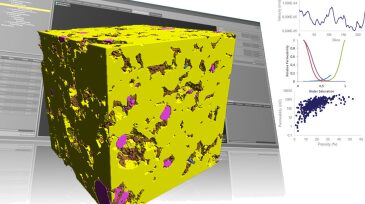
SponsoredThermo Scientific e-Core Software is a unique, high-performance computing platform for the characterization of complex porous media. It focuses on the three essential components of Digital Rock Analysis: parallel computing, multiscale modeling, and process-based reconstruction of 3D volumes.
-
The UK offshore Lancaster field was to prove that complex basement formations could be profitably developed. Instead, it is a reminder of how a long-term production test can drastically alter a reservoir model built upon years of exploration work.
-
Advances during the past decade in using convolutional neural networks for visual recognition of discriminately different objects means that now object recognition can be achieved to a significant extent.
-
Automated image-processing algorithms can improve the quality and speed in classifying the morphology of heterogeneous carbonate rock. Several commercial products have produced petrophysical properties from 2D images and, to a lesser extent, from 3D images.
-
The complete paper presents a technical discussion of a new microsampling technique for LWD and a corresponding wellsite technique to provide compositional interpretation, contamination assessment, reservoir-fluid compositional grading, and reservoir compartmentalization assessment.
-
In tectonically influenced regions, potential hydrocarbon traps are subject to complex states of stress. This scenario often translates into severe strike/slip (SS) and thrust-fault or reverse-fault (TF/RF) stress states.
-
Duri Field in Indonesia is the largest active steamflood project in the world. The field produces 73,000 BOPD, and 10,000 optimization jobs are executed annually to support base production.
-
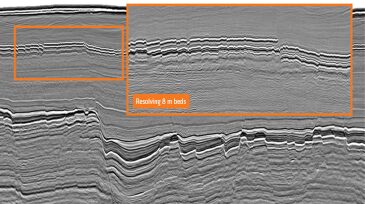
An ultrahigh-density high-resolution data set from the Hammerfest Basin is now available from PGS. The area is thought to contain around half of the undiscovered resources on the Norwegian continental shelf, according to the Norwegian Petroleum Directorate.
-
SponsoredDeveloping a reservoir with current capex constraints requires innovative technology to provide reliable reservoir production insight. This article describes how chemical tracer technologies can be integrated into reservoir development plans to reduce risk, minimize capex, and maximize ROI.