Reservoir characterization

This paper presents a case study from a mature field redevelopment project where pulsed neutron logging was integrated with advanced reservoir modeling to improve the understanding of fluid-contact dynamics and optimize new horizontal well placement.

This paper aims to showcase examples of how integrated analysis of surveillance data in the Azeri-Chirag-Gunashli field has improved reservoir understanding and informed reservoir-management decisions.

This paper presents an experiment investigating dissolution of basaltic primary minerals and conditions favorable for secondary phase formation under deep subsurface storage conditions.
-
 Three-dimensional reservoir models are best created with a combination of well logs and 3D-seismic data. However, the effective integration of these results is not easy because of limited seismic resolution.
 -
The paper discusses an approach for predicting the lateral variation of net to gross (NTG) by use of 3D probabilistic seismic inversion.
-
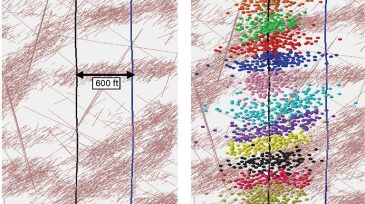
The objective of this study is to validate the concept of using a seismically derived discrete fracture network (DFN) calibrated with borehole measurements, for complex-hydraulic-fracture modeling.
-
The application of high-precision downhole temperature sensors has resulted in pressure-transient analysis (PTA) being complemented or replaced by temperature-transient analysis (TTA).
-
This paper describes the method developed to achieve underbalanced drillstem testing (DST) in a deepwater field offshore India.
-
Carbo Ceramics is making big strides in the use of ceramic proppant.
-
This paper discusses the successful, fully integrated, 3D Earth modeling (EM) and dynamic reservoir simulation of the Hollin Formation in the Lago Agrio Field within an operator’s first producer field in Ecuador.
-
A recently launched joint industry project (JIP) is working to improve petrophysical analysis methods to reduce the time and expense of characterizing tight sandstone gas reservoirs for exploration, appraisal, and production.
-
A new technique that analyzes scanning electron microscope (SEM) images of formation samples has been used to measure porosity and total organic carbon (TOC) in the Wolfcamp Shale of the Delaware Basin in west Texas.
-
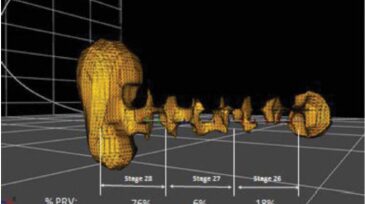
The story of unconventional oil and gas technology development has been focused on fractures. The formula has been more stages, more sand, and more water, targeting the most productive spots.