Reservoir simulation

Known as Arena, the collaboration aims to improve decision-making across increasingly complex reservoirs and growing volumes of subsurface data.
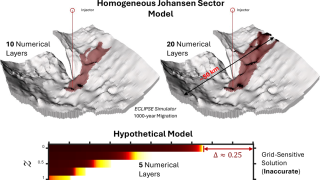
A new framework combines analytical and numerical insights, extending vertical equilibrium modeling and guiding reservoir-scale implementation, providing reservoir engineers with practical guidance for assessing accuracy across flow regimes and long-term carbon-dioxide migration.

This article from the SPE Integrated Reservoir Management Technical Section (IRMTS) examines the closed-loop IRM approach, from insight to execution to learning, and the limits of technology-driven solutions.
-
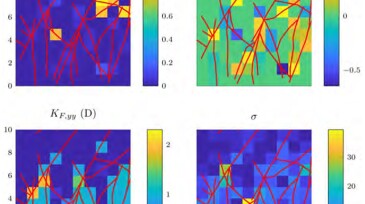
 This paper analyzes several configurations of convolutional neural networks suited for predicting upscaled fracture permeabilities and shape factors required to close a dual porosity/dual permeability model.
 -
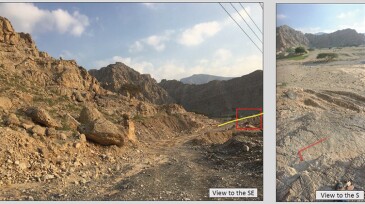
The authors write that simple and straightforward observations on outcrops can be used to build 3D models that mimic geological relationships accurately.
-
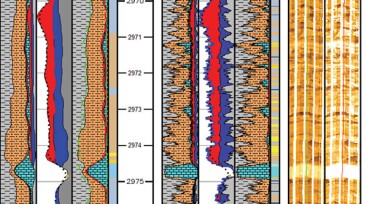
This paper presents an integrated work flow to model mechanical properties at sufficiently high resolution to honor accurately rock fabric and its effects on height and complexity and, thus, production.
-
This paper presents a comprehensive comparison of two modeling-based approaches of fluid tracking for condensate allocation and gas usage.
-
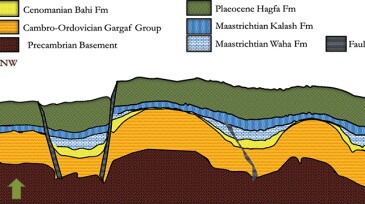
The authors develop a representative geostatistically based 3D model that preserves geological elements and eliminates uncertainty of reservoir properties and volumetric estimates for a Libyan field.
-
The authors examine a theory that low resistivity in a Chinese reservoir is caused by bound water trapped in clay minerals and develop an improved model for production prediction of offset wells.
-
In reviewing the long list of papers this year, it has become apparent to me that the hot topic in reservoir simulation these days is the application of data analytics or machine learning to numerical simulation and with it quite often the promise of data-driven work flows—code for needing to think about the physics less.
-
The authors describe the process of building multiple scenario-based models to optimize development planning in preparation for the upcoming production phase of the Ichthys field offshore Australia.
-
The authors demonstrate how artificial intelligence and machine learning can help build a purely data-driven reservoir simulation model that successfully history matches dynamic variables for wells in a complex offshore field and that can be used for production forecasting.
-
The paper describes an end-to-end deep surrogate model capable of modeling field and individual-well production rates given arbitrary sequences of actions.