Reservoir simulation
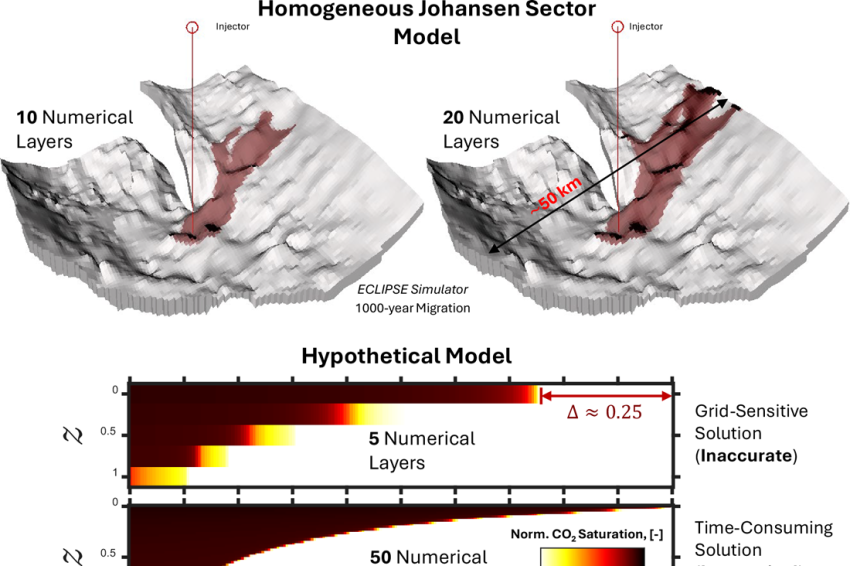
A new framework combines analytical and numerical insights, extending vertical equilibrium modeling and guiding reservoir-scale implementation, providing reservoir engineers with practical guidance for assessing accuracy across flow regimes and long-term carbon-dioxide migration.

This article from the SPE Integrated Reservoir Management Technical Section (IRMTS) examines the closed-loop IRM approach, from insight to execution to learning, and the limits of technology-driven solutions.

This paper presents a reduced physics-based model that accelerates the ability to screen infill-location optimization, using the fast marching method to maximize production for a reservoir with multiple realizations.
-
 As we see in these papers, new tools and techniques are being developed to match the ability of engineers to meet the challenges posed by assets such as shale reservoirs and maturing fields.
 -
This paper presents a step-by-step work flow to facilitate history matching numerical simulation models of hydraulically fractured shale wells.
-
In the complete paper, the authors present a novel approach that uses data-mining techniques on operations data of a complex mature oil field in the Gulf of Suez that is currently being waterflooded.
-
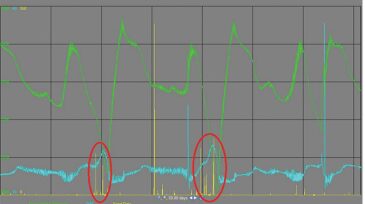
The complete paper discuses a well with a history of sand production that exhibits long cyclic slugging behavior.
-
Fit-for-purpose tactics likely will be of ever-increasing focus going forward. If it is not adding value, it should not be done. But “fit for purpose” encompasses a wide range of possibilities—leveraging new approaches as well as learning from old approaches and improving current approaches.
-
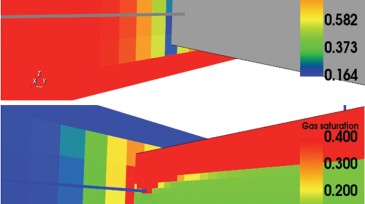
In the complete paper, the authors revisit fundamental concepts of reservoir simulation in unconventional reservoirs and summarize several examples that form part of an archive of lessons learned.
-
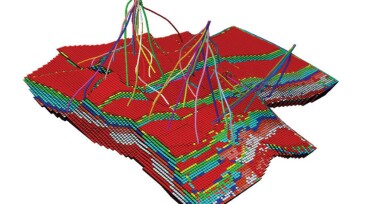
In the complete paper, a novel hybrid approach is presented in which a physics-based nonlocal modeling framework is coupled with data-driven clustering techniques to provide a fast and accurate multiscale modeling of compartmentalized reservoirs.
-
In the complete paper, the authors reduce nonuniqueness and ensure physically feasible results in multiwell deconvolution by incorporating constraints and knowledge to methodology already established in the literature.
-
In the complete paper, the authors derive a novel analytical solution to model the temperature signal associated with the shut-in during flowback and production periods.
-
The complete paper demonstrates the benefits of honoring data measurements from a multitude of potential sources to help engineers do a better job of including more diagnostics into routine operations to provide additional insight and result in improved models and completion designs.