Reservoir

This article from the SPE Integrated Reservoir Management Technical Section (IRMTS) addresses decision timing across the reservoir cycle.
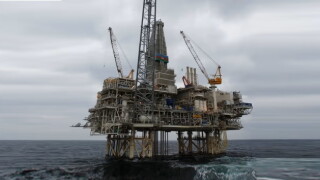
BP said it expects to keep the Azeri-Chirag-Gunashli (ACG) project in production into the 2040s by tapping into separate nonassociated gas reservoirs.

Xu outlines the thinking and theories that led his team to six world-class oil discoveries that total more than 100 million tons of proven geological reserves since 2021.
-
 This paper compares deep transient testing with drillstem testing in a high- and low-permeability gas reservoir, including test-selection implications and best practices.
 -
This paper describes the implementation of a one-way wave equation in slowness domain outputting gathers up to Nyquist frequency, which can be used to generate high-resolution seismic sections and amplitude-vs.-offset studies.
-
This paper describes a novel 6.75-in. logging-while-drilling geochemical tool developed for accurate lithology, mineralogy, well-placement, and geosteering applications in complex reservoirs.
-
This paper presents a self-supervised approach for training a seismic foundation model and demonstrates scenarios in which it is used for seismic data conditioning, interpretation, and inversion through six real-use cases.
-
This paper provides an overview of an operator’s application of 4D time-lapse seismic technology over approximately a decade and includes future perspectives.
-
Seismic technology continues to progress at a remarkable pace, driven by advances in artificial intelligence, imaging, interpretation, monitoring, and the expansion of seismic applications across the wider energy sector. One clear trend is the industry’s move toward high-frequency and ultrahigh-resolution seismic, which has pushed the limits of what can be resolved in…
-
This paper describes rock-compressibility correlations for carbonated naturally fractured reservoirs in Mexico that considers a range of important geological and dynamic aspects.
-
This paper offers an exploration into the field applications of multiphase flowmeters (MPFMs) across global contexts and the lessons learned from implementation in a smart oil field that uses several types of MPFM.
-
A final investment decision is also expected by the end of the year for the company’s first low-carbon data center project.
-
Malampaya East discovery is estimated to hold 98 Bcf of gas and may help offset declines at the country’s only producing gas field.