Reservoir

The events will be co-located 3–5 May 2027 at Reliant Park in Houston, Texas.

This work uses a novel pseudosteady-state-based simulation to reduce training-data-generation cost while maintaining high-performance predictions of data-driven proxy models for carbon-sequestration projects.

The current challenge in reservoir simulation extends beyond developing better models; it entails creating solutions that are faster, more responsive, and genuinely instrumental in guiding decision-making. The papers selected this year clearly represent this evolution.
-
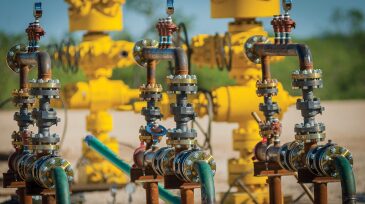
 Engineers thrive on making more from less, and this month’s paper selections highlight efforts to improve the efficiency of gas-production operations throughout the world.
 -
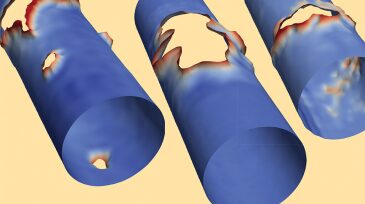
When a plug gets stuck in a well, consider the cause. Often stuck fracturing tools are a warning sign of casing trouble. Companies that have investigated plug problems have been surprised by the findings.
-
Though shelved by low oil prices, the plan to execute the largest enhanced oil recovery program of its kind offers insights into what it may take for the shale sector to escape pilot mode and scale up gas huff ’n’ puff operations.
-
Automated image-processing algorithms can improve the quality and speed in classifying the morphology of heterogeneous carbonate rock. Several commercial products have produced petrophysical properties from 2D images and, to a lesser extent, from 3D images.
-
With reduced new unconventional well activity, practices such as frac-hit mitigation—pressurization of parent wells during child-well fracture stimulation—have become increasingly important to reduce parent-well proppant cleanouts as well as to maximize production from both parent and child wells.
-
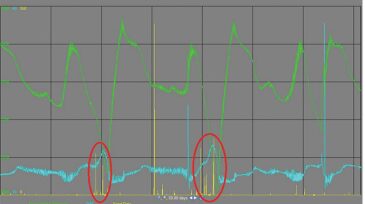
The complete paper discuses a well with a history of sand production that exhibits long cyclic slugging behavior.
-
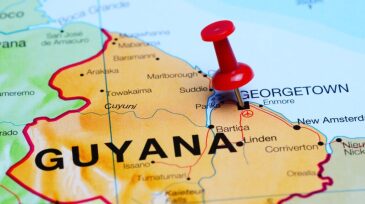
This latest find means the offshore driller has averaged at least three new discoveries each year since it began drilling offshore Guyana where it plans to recover up to 8 billion barrels of crude.
-
Before the giant Johan Sverdrup field had produced even one barrel of oil, operator Equinor and its license partners set a recovery ambition of greater than 70% for the field.
-
The complete paper discusses optimization of a development plan involving low-salinity water injection.
-
Decline-curve analysis is one of the more widely used forms of data analysis that evaluates well behavior and forecasts production and reserves. This paper presents technologies that apply DCA methods to wells in an unbiased, systematic, intelligent, and automated fashion.