Reservoir

Operators aren’t rushing to drill, even as the closure of the Strait of Hormuz drives oil prices up.

The authors write that deployment of artificial-intelligence-based high-gas/oil ratio well-control technology enabled stabilization of well performance and maintenance of optimal production conditions.

The paper describes the revalidation of a deepwater prospect that resulted in a no-drill decision.
-
 This study presents experimental results on the use of carbon dioxide (CO2) as an enhanced-oil-recovery (EOR) agent in preserved, rotary sidewall reservoir core samples with negligible permeability.
 -
This paper presents a pragmatic integrated work flow used to optimize development and guide critical development decisions in the Black Hawk field.
-
This paper discusses fracture stimulation in the first joint-venture shale-gas project with foreign companies in China.
-
In 2010, exploration of gas-rich and possibly liquid-rich shale reservoirs began in northern Mexico. A two-stage integrated workflow was developed to achieve set objectives.
-
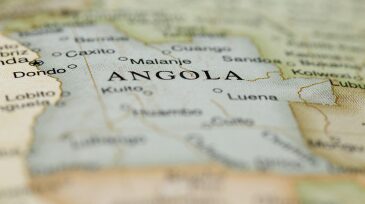
Angola’s Block 17 is nearing the end of one era of development and the beginning of its next.
-
This article reviews methods used to understand the complexities associated with production from shale.
-
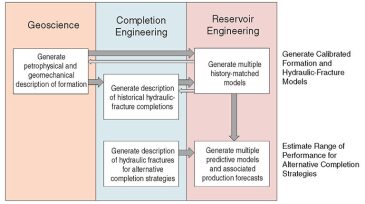
This paper describes a modeling technique by which hydraulic fractures are represented as part of the well model rather than as any form of refinement in the simulation grid.
-
Multiwell modeling of shale plays is not performed frequently. In projects in which a main objective is well spacing or completion optimization, a comprehensive multiwell reservoir-simulation study is required.
-
Shale gas is fast becoming a source of energy of paramount significance for the coming years. Although commercial production has been achieved in numerous plays throughout the world, the actual physics involved is poorly understood.
-
As the development of shale oil and gas becomes increasingly significant, so does the need for modeling tools for their accurate and timely forecasting.