Reservoir

This paper documents the testing, integration, and field deployment of a metal expandable packer used as an openhole toe isolation plug in a deepwater well under high-pressure, high-temperature conditions.

Three papers are highlighted as the primary contributions because of their broad industry relevance. They focus on improving formation particle-size characterization, expanding the application of openhole gravel packs in depleted and compartmentalized reservoirs, and advancing the understanding of capillary pressure in sand production.

This paper aims to establish a set of best practices for generating particle-size-distribution data from core samples.
-
 Reviewing a myriad of papers presented at different conferences during the past year, I can group the current trends in heavy-oil operations and research into two major categories: Process optimization and use of chemicals as additives to steam and water.
 -
Steam-assisted gravity drainage (SAGD) performance in bitumen-recovery projects in Alberta is affected by geological deposits, reservoir quality, and operational experience.
-
Although polymer flooding has become a promising enhanced oil recovery (EOR) technique, no field tests have been performed to date in Alaska’s underdeveloped heavy-oil reservoirs.
-
A downhole compressor solution based on advanced magnetic technologies completed its first field trials in an unconventional gas well. It resulted in a 62% increase in gas production and significant increase in liquid production compared to using a rod pump previously in the well
-
When engineers went searching for clues on how fractures move beneath the surface, they expected to uncover important learnings. They did not know they were on the path to a new invention.
-
This paper discusses a prescriptive analytics framework to optimize completions in the Permian Basin.
-
The complete paper explores the use of multilevel derivative-free optimization for history matching, with model properties described using principal component analysis (PCA) -based parameterization techniques.
-
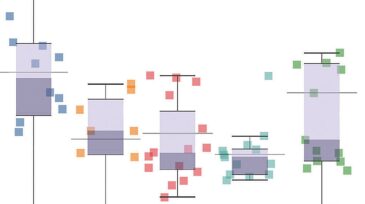
If design A yields the same 90-day production at 10% lower cost in a series of wells than design B wells, is design A the better one? Using pressure-based fracture measurements, the separability of variables between two completion designs can be evaluated.
-
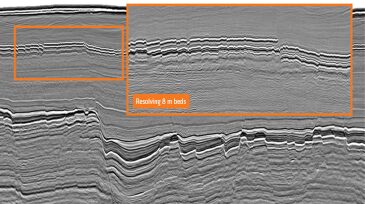
An ultrahigh-density high-resolution data set from the Hammerfest Basin is now available from PGS. The area is thought to contain around half of the undiscovered resources on the Norwegian continental shelf, according to the Norwegian Petroleum Directorate.
-
SponsoredDeveloping a reservoir with current capex constraints requires innovative technology to provide reliable reservoir production insight. This article describes how chemical tracer technologies can be integrated into reservoir development plans to reduce risk, minimize capex, and maximize ROI.