Reservoir
This study demonstrates how routinely acquired downhole temperature data allows for direct estimation of fluid saturations and delivers more accurate reservoir volume assessments, particularly in aquifer-supported systems.

Sponsored
Effective data analysis depends on seeing connections that matter. Explore how Spotfire enables a more intuitive approach to understanding petroleum data.

The deal adds over 1,000 potential drilling locations and almost doubles oil production for Houston-based Magnolia.
-
 A US oil company is using its in-house laboratory's digital imaging devices to analyze reservoir rocks in new plays to answer questions raised by complex tight oil formations that cannot be answered using routine core testing methods.
 -
Flowback (or cleanup) of fracturing treatments can have a profound influence on well productivity in unconventional reservoirs. The process of cleanup crosses many discipline boundaries.
-
This paper discusses fracture stimulation in the first joint-venture shale-gas project with foreign companies in China.
-
In this paper, a strategy for designing a novel small-molecule CO2 thickener is detailed.
-
This paper investigates the use of gelling CO2/water emulsions, stabilized by silica nanoparticles, to control the mobility of CO2.
-
This study presents experimental results on the use of carbon dioxide (CO2) as an enhanced-oil-recovery (EOR) agent in preserved, rotary sidewall reservoir core samples with negligible permeability.
-
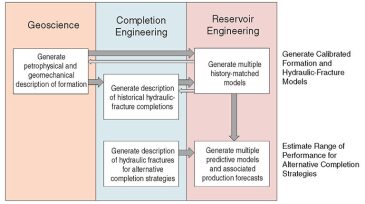
This paper presents a pragmatic integrated work flow used to optimize development and guide critical development decisions in the Black Hawk field.
-
In 2010, exploration of gas-rich and possibly liquid-rich shale reservoirs began in northern Mexico. A two-stage integrated workflow was developed to achieve set objectives.
-
Angola’s Block 17 is nearing the end of one era of development and the beginning of its next.
-
This article reviews methods used to understand the complexities associated with production from shale.