Reservoir

Three papers are highlighted as the primary contributions because of their broad industry relevance. They focus on improving formation particle-size characterization, expanding the application of openhole gravel packs in depleted and compartmentalized reservoirs, and advancing the understanding of capillary pressure in sand production.

This paper aims to establish a set of best practices for generating particle-size-distribution data from core samples.

This paper discusses the successful execution of two openhole gravel-pack completions in two Gulf of Mexico fields with depleted reservoirs.
-
 Data volumes are growing at an exponential rate. How can high-performance computing solutions help operators manage these volumes? Will faster, stronger processors and cloud computing solutions be the answer?
 -
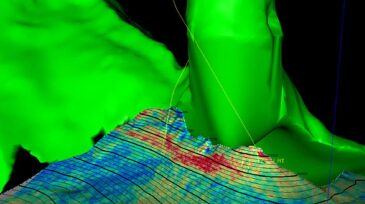
This paper describes interpretation results of a 4D seismic-monitoring program in a challenging Middle East carbonate reservoir.
-
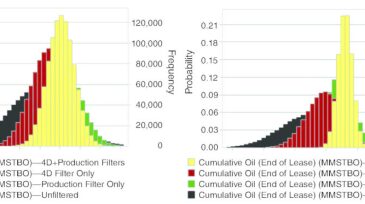
This paper outlines the value of 4D for reducing uncertainty in the range of history-matched models and improving the production forecast.
-
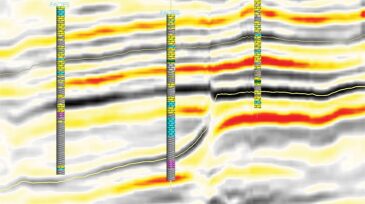
This paper discusses a project with the objective of leveraging prestack and poststack seismic data in order to reconstruct 3D images of thin, discontinuous, oil-filled packstone pay facies of the Upper and Lower Wolfcamp formation.
-
Last year saw continued contraction in the seismic data-acquisition industry. With this drop in acquisition business, fewer seismic data-acquisition papers were published. Nevertheless, three very good SPE papers covering important acquisition and processing topics are featured here.
-
Production growth in the Permian Basin requires drill rigs running at a high pace. That is challenging companies to push well productivity.
-
The agency updated its methodology and production volume estimates to factor increasing production from new, emerging plays as well as older plays that have rebounded thanks to drilling advancements.
-
The struggle to overcome the challenge of frac hits has led to a critical dialogue about which pathway the shale sector should take. One idea is to simply put the problem at the center of every major decision.
-
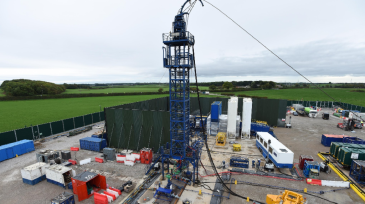
UK’s first horizontal shale well has yielded positive results after an initial flow test. But further testing—and fracturing of a second well—will have to come amid a continuation of UK’s stringent regulations on induced seismicity.
-
Electromagnetic images can show where water flows during a hydraulic fracture. A test in the Anadarko Basin showed a fault there was a bigger hazard than expected.