Risk management

The 2026 Upstream Scale Guidelines establish a common workflow for field measurements, scale modeling, and risk assessment to support more consistent operational decisions.

A shared digital mindset across subsurface, subsea, and drilling and wells is accelerating well planning at Vår Energi.

The legacy of per- and polyfluoroalkyl substances (PFAS) is a persistent problem in many industries, including upstream oil and gas. In this Q&A, remediation expert Grant Scott presents the trouble with these “forever chemicals” and the mitigating efforts being used.
-
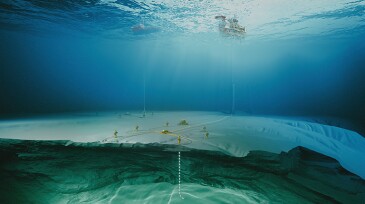
 After more than 2 decades of talk, multiple millions of dollars in investments, and a decade’s worth of joint industry projects, operators are starting to get on board with electrification as the base case for subsea solutions.
 -
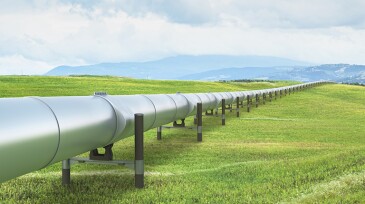
The complete paper provides tools useful for decision-makers to prevent adverse pipeline incidents caused by human action, poor facility performance, accidents, emergencies, and external events.
-
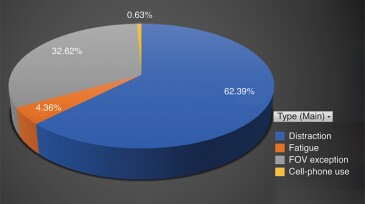
The authors’ objective is to understand further how technology can support the prevention of driver fatigue and to explore driver beliefs related to fatigue and the technology designed to assist in fatigue avoidance.
-
As European majors push hard and fast to decarbonize energy and move into new and renewable sources, US majors are focusing on cleaner, more efficient hydrocarbons. Which approach and which companies will gain the upper hand?
-
The South African Development Community has agreed to send up to 3,000 troops to contain Mozambique’s terrorist insurgency after Total declared force majeure and evacuated all personnel from its Mozambique LNG worksite.
-
Although they only make up about 10% of total US production, the vast majority of onshore US conventional wells are stripper wells. What are the implications for buyers seeking assets?
-
This paper presents a novel matrix to identify environmental and social elements relevant for the development of oil and gas projects. It also proposes a useful traffic light and multivariate analysis methods for the evaluation of these elements.
-
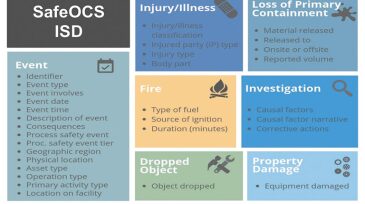
In the aftermath of the Deepwater Horizon oil spill, the oil and gas industry, regulators, and other stakeholders recognized the need for increased collaboration and data sharing to better identify safety risks and address them before an accident occurs.
-
A global trend has developed toward the application of risk-based assessment (RBA) techniques for managing environmental risks and considering potential effects of produced-water (PW) discharge.
-
The complete paper discusses Equinor’s operation planning tool, developed to present planners with the technical conditions of a platform, identify potentially dangerous combinations of concurrent activities, and propose learnings from 8 years of incident recordings.