

Sand management/control

Aurora Innovation and Detmar Logistics have inked a deal for 30 autonomous trucks that will begin hauling sand in the region next year.

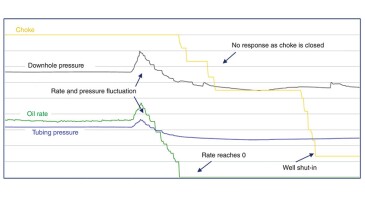
This paper describes an automated workflow that helps mitigate sanding caused by excessive drawdown by determining the minimum tubinghead pressure.
As reservoirs become more complex and economics tighter, the industry is shifting toward more-adaptive, data-informed, and targeted solutions. New research highlights innovative solutions that not only address technical limitations in existing designs but also enhance decision-making through digitalization and cross-disciplinary integration. The papers highlighted her…
-
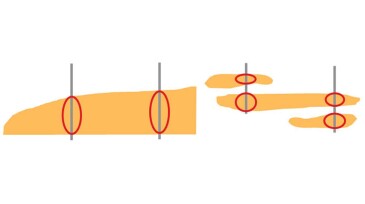
 This paper describes an alternative lower-completion concept for developing Lower Wilcox reservoirs referred to as high-angle multifractured well design.
 -
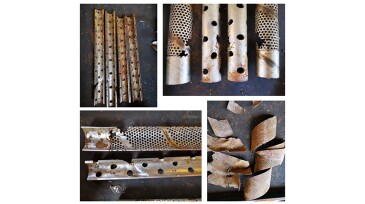
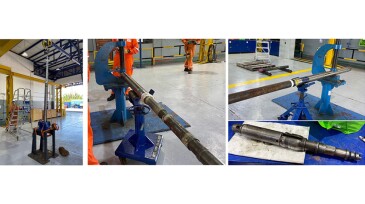
This paper presents a study conducted on past through-tubing sand-screen installations to understand performance and develop a workflow to improve future installations.
-
Industry leaders champion collaborative solutions as essential for overcoming fracturing limitations.
-
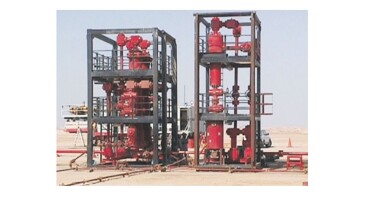
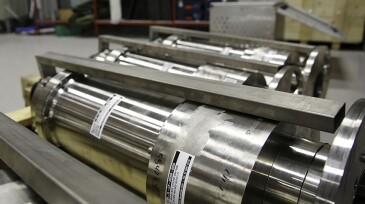
This study introduces a cleanup- and flowback-testing approach incorporating advanced solids-separation technology, a portable solution, equipment automation, improved metallurgy, and enhanced safety standards.
-
This investigation of fluid flow and particles movement uses a coupled CFD/DEM modeling approach to provide new insights into the multiscale mechanism of sand production.
-
The authors of this paper discuss how intelligent completions in the Gulf of Mexico have allowed for increased production, reduction in operating expenses, enhanced overall reservoir recovery, and improved safety and environmental performance.
-
Low flow rates presented a challenge in handling solids from a jetting operation before reinjection. A new cyclone was designed, tested, and installed in just 4 months to manage the suboptimal conditions.
-
Drilling longer wells, increasing the number of fracture stages, and completing multiple zones in complex stacked reservoirs, along with optimizing multilateral wells with sand control to enable long laterals in stacked reservoirs, have emerged as key focuses of the industry.
-
This paper describes an optimized multizone single-trip gravel-pack system developed and implemented successfully in Brunei.
-
This paper describes the qualification of a multilayer, open-cell matrix polymer system for the first horizontal deployment in an offshore gas well.



Page 1 of 8