Well integrity/control

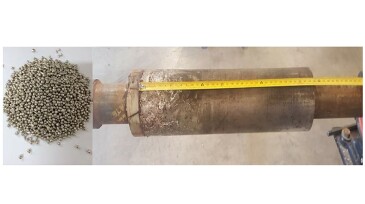
The authors reach conclusions that the industry should define a standard testing method to improve swelling performance, including validation of repeatability, to complement existing guidelines.

This paper presents the development of an advanced simulation tool aimed at providing a better understanding of the complex fluid-displacement phenomena present in well-cementing processes.

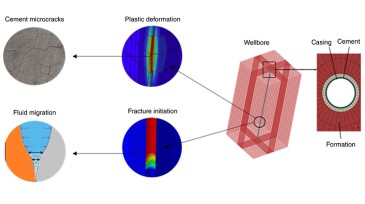
This paper examines the effects of cement voids and microannuli on the collapse resistance of pipe/cement/pipe systems with void angles ranging from 0º to 70º.
-
 This paper presents laboratory testing and application of a resin-cement system designed to be placed as a tail slurry to provide enhanced mechanical properties compared with a conventional slurry.
 -
This paper presents an evaluation of geopolymer cementing for use in oil and gas wells, specifically in the primary cementing of liner strings in the Permian Basin.
-
This paper describes a foamed cement solution designed and implemented to cement shallow intermediate casing strings in a heavy oil play in Northeast Alberta.
-
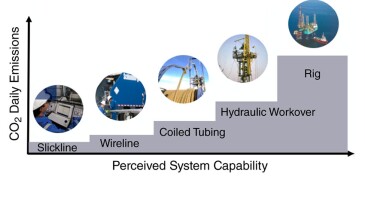
The authors challenge the traditional planning and execution of interventions, both from an operational and commercial standpoint, and examine where room exists for significant improvement in the industry
-
This paper provides insights into the technical and economic viability of repurposing oil and gas wells for geothermal energy production for direct heating.
-
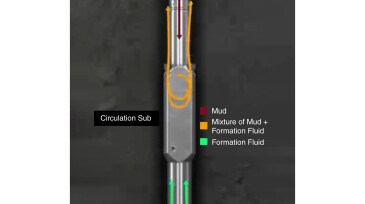
This paper addresses the challenges related to well control and the successful implementation of deep-transient-test operations in an offshore well in Southeast Asia carried out with the help of a dynamic well-control-simulation platform.
-
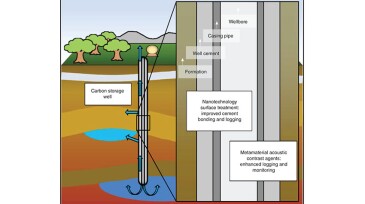
The authors of this paper describe a suite of technologies that enables enhanced well robustness and performance modeling and monitoring of carbon storage facilities.
-
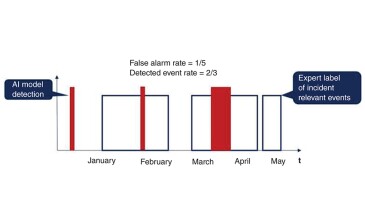
This paper presents the proof of concept of artificial-intelligence-based well-integrity monitoring for gas lift, natural flow, and water-injector wells.
-
Typically, oil and gas producing wells are abandoned toward the end of their life cycles with reservoir pressures depleted compared with the virgin pressures. Carbon capture and storage projects, however, present different operating conditions.
-
This paper defines conditions for optimized well-diagnostics investigation and describes a rigless solutions for common well-barrier failures and lessons learned from operator field trials.