Testing page for app
-
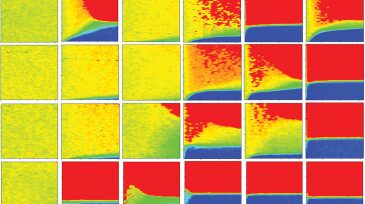
 Bottle tests are the preferred method to test petroleum emulsion stability in the industry today. A new technique using nuclear magnetic resonance (NMR) is available to evaluate both stability and demulsification behavior of emulsions.
 -
While drilling in deepwater Gulf of Mexico, a topdrive failure forced the shutdown of all drilling operations for the rig operator and lasted for 114 hours.
-
Fit-for-purpose tactics likely will be of ever-increasing focus going forward. If it is not adding value, it should not be done. But “fit for purpose” encompasses a wide range of possibilities—leveraging new approaches as well as learning from old approaches and improving current approaches.
-
In an era where capital markets are hitting the brakes on funding the US shale sector, operators have increasingly pivoted from production growth to maximizing the rates of return via lower-cost wells.
-
In the complete paper, the authors revisit fundamental concepts of reservoir simulation in unconventional reservoirs and summarize several examples that form part of an archive of lessons learned.
-
In the complete paper, a novel hybrid approach is presented in which a physics-based nonlocal modeling framework is coupled with data-driven clustering techniques to provide a fast and accurate multiscale modeling of compartmentalized reservoirs.
-
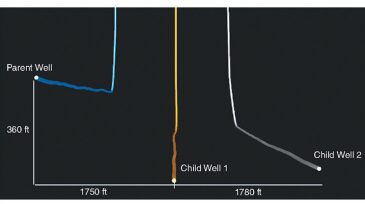
In the complete paper, the authors reduce nonuniqueness and ensure physically feasible results in multiwell deconvolution by incorporating constraints and knowledge to methodology already established in the literature.
-
The complete paper highlights examples of nonmetallic materials selection and qualification for upstream water-injection and producer and hydrocarbon wells and presents suggestions for future progress.
-
The complete paper presents the results of evaluation of laboratory and demonstration trials of HDPE liner to mitigate premature failures and prolong the run life of production tubing.
-
The complete paper describes an operator’s experience in confirming glass fiber-reinforced epoxy (GRE) as an effective alternative to high-grade corrosion-resistant alloys (CRA) to extend tubing life in high-velocity gas wells.