

Latest News
-
 For excellence to become a reality in any important area of operations, especially safety, there are five vital capacities organizations must develop, monitor, and synergize to adapt and thrive in a fast-paced and ever-changing world.
 -
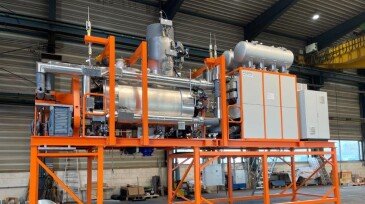
The volume reduction of naturally occurring radioactive material waste with indirectly heated vacuum distillation has been overlooked in research as a viable treatment option. This paper describes several key assessment factors that will allow a more detailed understanding of the benefits of that option.
-
Leadership engagement is needed to drive health and safety performance in a world of work in an increasing state of flux, according to a survey conducted by ERM.
-
Heightened focus on methane emissions management spurs a new conceptual framework to aid in determining the duration of detected methane emissions, data that may be useful to stakeholders responsible for measurement-informed emission protocols.
-
The agreement puts an early contractual framework in place for closer collaboration sooner on the project pair.
-
Drillships Deepwater Asgard and Deepwater Atlas have fresh US Gulf Mexico campaigns upcoming that will earn the driller more than $500,000 per day.
-
The new AIQ ownership structure will see Presight acquire 51% shareholding, with ADNOC retaining 49% and receiving a 4% stake in Presight. AIQ will continue to operate as a standalone company.
-
The prestigious award celebrates OTC exhibitors who are revolutionizing the industry with their groundbreaking technologies. This year, 15 exceptional technologies—five of which hail from small businesses—were chosen for their advancements. Join us in recognizing these trailblazers who are shaping the future of offshore energy.
-
The health, safety, and environment (HSE) discipline is one of the broadest in SPE, from the perspectives of both its scope and its cross-discipline impact. As JPT celebrates 75 years, former HSE Technical Director Roland Moreau examines some of the defining moments in the history of HSE in the industry, the growth of the discipline, and the challenges it still faces.
-
Matthew Bryant has spent years trying to convince engineers that the API proppant testing standard has significant limitations. And he may well be right.
-
At COP28, more than 50 oil and gas companies took a historic step toward decarbonization by launching the Oil & Gas Decarbonization Charter. This article explores the importance of this effort, the opportunities available to the industry to reduce its Scope 1 and 2 emissions, and the key technologies needed to achieve the net-zero goal.
-
Losing drill-hungry independent and private companies in the region to robust M&A will mean an activity slowdown that is expected to impact volumes coming from the nation’s largest oil field.









Explore Content by Discipline
Trending Content





Get JPT articles in your LinkedIn feed and stay current with oil and gas news and technology.