

Latest News
-
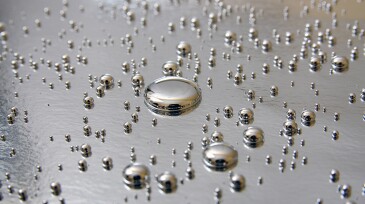
 The paper provides an approach to mitigating the adverse effects of mercury found in production fields, including treatment-facility requirements and suitable technologies for production fields and onshore facilities.
 -
Devon, Shell, and SM Energy offer some of their latest learnings from recent independent subsurface diagnostics projects. Their work underscores why this arena of technology has become a cornerstone for hydraulic-fracture design in tight-rock reservoirs.
-
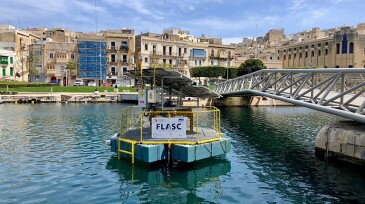
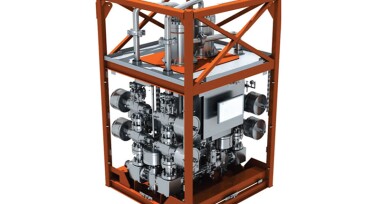
The partnership of Subsea 7 and Flasc has a plan to use out-of-service pipelines as pressure vessels in a hydro-pneumatic energy storage concept.
-
The assumption of lower emissions from natural gas only holds true when the methane leaks and flaring are addressed. Mitigation of methane emissions offers an opportunity for the oil and gas industry to drastically reduce overall emissions that are typically reported on a CO2-equivalent basis. Some producers opt to showcase their good performance via voluntary certifi…
-
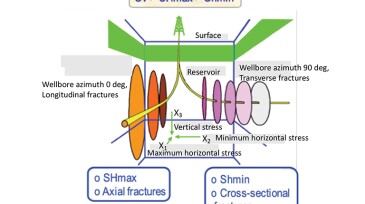
This paper presents a work flow that has been applied to crossdipole sonic data acquired in a vertical pilot well drilled in the Permian Basin.
-
This paper highlights solids-management technologies that are currently available and still in use topside (some of which are potentially outdated).
-
This paper describes a new intelligent dosing technology to reduce liquid loading in an unconventional tight gas reservoir.
-
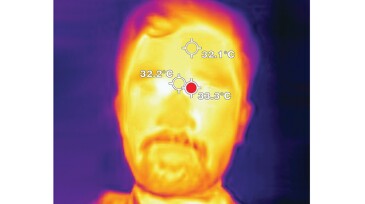
This paper explains how machine learning and physiology can be used to improve rig technical training by monitoring the operator’s stress, leading to targeted training to manage such situations better.
-
The paper provides insights on diffusion in organic matter to correct a primary source of underestimation of gas production in shale-gas models.
-
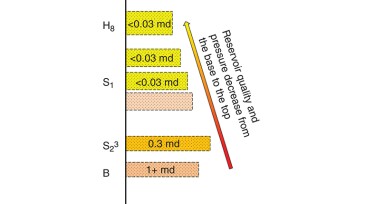
This paper presents a mathematical analysis of how incorrect estimates of initial reservoir pressure may affect rate-transient analysis in ultralow-permeability reservoirs.
-
The key element of hydraulic-fracture modeling is the prediction of the generated fracture geometries. Research conducted over the years has trickled down predictive software. Nevertheless, the ability to design optimal fracture treatments is hampered, as we cannot “see” the subsurface.
-
In this work, novel physics-based models and machine-learning models are presented and compared for estimating permanent-downhole-gauge measurements.

Explore Content by Discipline
Trending Content





Get JPT articles in your LinkedIn feed and stay current with oil and gas news and technology.