offshore
-
 Kashagan crude reached the global markets. The world’s most expensive upstream project restarted production and about 195,000 barrels, produced during the startup process, were shipped for export.
 -
The report was written by a steering committee of SMEs with industry input from an SPE summit as well as members from SPE online communities. It is based on discussions and conclusions from the summit and is intended to provide guidance on an industry-wide safety management data sharing program.
-
Dubai Petroleum embarked on a new mission last year to drill and complete its first multistage, hydraulically fractured, and propped horizontal well from an offshore platform.
-
The compact nature of offshore platforms makes the management of the exhaust from engines a concern from a health and safety standpoint. In this paper, the authors present a typical plume-impingement problem aboard an offshore platform and discuss the application of plume-cooling technology.
-
Subsea processing is an evolving technology in ultradeepwater development and has the potential to unlock a significant amount of hydrocarbon resources. In this paper, the authors have reviewed the application of subsea systems in 12 deepwater fields and discussed the significance of each.
-
Helicopter operations are important in the offshore industry but accidents involving them can have fatal consequences. This paper focuses on risk mitigation during the loading/unloading task of a slickline/wireline job from various viewpoints, including the psychological aspects of the crew.
-
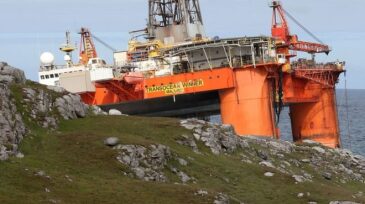
Eight salvage experts have boarded the Transocean Winner, which ran agorund off the Isle of Lewis on 8 August.
-
Ghana’s fishers and coastal communities have raised concerns over the effects of offshore oil exploration and production relating to the giant Jubilee field. This paper describes the process and results of the multistakeholder approach to solving marine-zone conflicts.
-
McDermott and Nakilat-Keppel Offshore Marine (N-KOM) agreed to an exclusive cooperation agreement for offshore engineering, procurement, construction, and installation projects within Qatari waters.
-
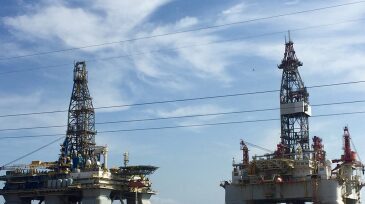
The Noble Jim Day semisubmersible (left) arrived at Harbor Island in Port Aransas, Texas, on 29 July to be cold stacked.