AI/machine learning

The deals, with a potential value exceeding $3.7 billion, are aimed at strengthening Saudi Aramco’s supply chains and expanding its use of industrial artificial intelligence.

This work applies fuzzy logic, a well-established artificial-intelligence technique, to quantitatively assess connectivity between injectors and producers in a giant presalt field in the Santos Basin of Brazil.

The DOE-backed EGS-Twin project aims to simulate geothermal production systems, helping operators better predict performance and maximize output.
-
 Earlier this year, 19 teams competed in a machine-learning contest held by the Data Analytics Study Group of SPE’s Gulf Coast Section. The was the first competition of its kind for SPE. Here, the organizers of the contest present some of the techniques used and lessons learned from the Machine Learning Challenge 2021.
 -
Amir Husain sat down with OTC Live to present the trajectory of artificial intelligence and how it will change the face of oil and gas.
-
The conventional wisdom about artificial intelligence is that bigger is better. But enormous neural networks come with some costs, including making it difficult for researchers to figure out how and why the software makes its predictions and decisions.
-
Physics-based simulations plus machine-learning exercises are yielding a more comprehensive look at production volumes from unconventional assets.
-
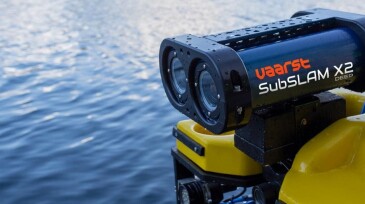
Vaarst, a spinoff from subsea robotic and hydrographic survey company Rovco, wants to accelerate advancement in ocean robotics by providing access to artificial-intelligence technology to marine and subsea providers for autonomous robotic work.
-
Petrolern has received a $1.15-million grant from the US Department of Energy to develop and commercialize its technology that models in-situ stresses by using available data.
-
Anomalies in heart function can be diagnosed in real time by measuring an electrical signal. Petroleum engineers have adapted the concept to diagnose anomalous drilling conditions in real time using a shock signature recorded downhole.
-
For oil and gas companies to remain in existence in the second half of the 21st century, they must find ways to dramatically reduce, if not eliminate, their output of carbon dioxide and other greenhouse gases. Artificial intelligence technology could provide one tool to help the energy industry accomplish that staggeringly difficult goal.
-
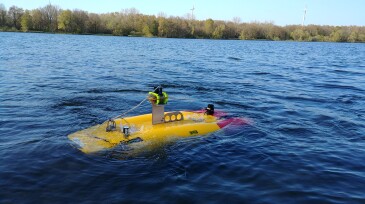
The new DeeperSense project, an international consortium led by the German Research Center for Artificial Intelligence, is working on technologies that combine the strengths of visual and acoustic sensors with the help of artificial intelligence. The aim is to significantly improve the perception of robotic underwater vehicles.
-
Technology is advancing, and applications are growing, but scaling faces technological and human challenges.