Completions

Chevron and Halliburton describe how they built and deployed the fully autonomous closed-loop fracturing system that enables subsurface-driven optimization.

Weatherford CEO Girish K. Saligram said the acquisition will bolster Weatherford’s completions offerings and unconventional reservoir capabilities.

Each of these papers presented at SPE conferences exemplifies the continued progress of industry solutions to maximize commercial value of basins within ever-changing oil and gas dynamics.
-
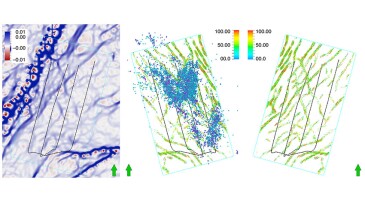
 A proposed integrated workflow aims to guide prediction and mitigating solutions to reduce casing-deformation risks and improve stimulation efficiency.
 -
This case study outlines a methodology to optimize and control hydraulic fracturing parameters by achieving 100% cluster efficiency and overcoming formation leak-off.
-
We’re thrilled to announce the launch of the 2025 SPE/JPT Drilling and Hydraulic Fracturing Technology Review. This exclusive, official publication will be distributed at three major SPE industry events.
-
SponsoredTAQA's PulseEight Secure and SwellStack solutions avoid costly workovers and deferred production by riglessly retrofitting an alternative to failed subsurface safety valves.
-
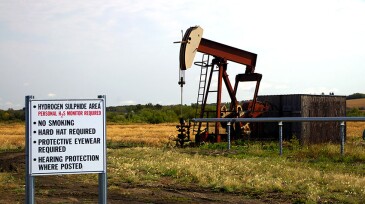
The Energy & Environmental Research Center in North Dakota outlines the difficulty that the oil and gas industry faces in pinpointing sources of H2S production.
-
These papers underscore the need for strategic adaptation of automation systems to the specific challenges of offshore environments. The success of predictive machine learning in this context depends on its ability to offer measurable financial benefits, improve safety, and drive operational efficiency.
-
Drilling longer wells, increasing the number of fracture stages, and completing multiple zones in complex stacked reservoirs, along with optimizing multilateral wells with sand control to enable long laterals in stacked reservoirs, have emerged as key focuses of the industry.
-
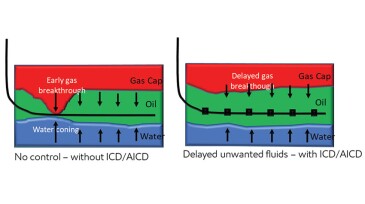
This paper provides insight into designing advanced well completions offshore West Africa with autonomous inflow control devices that enable maximizing the producing life of the wells under various challenging reservoir conditions.
-
This paper describes an optimized multizone single-trip gravel-pack system developed and implemented successfully in Brunei.
-
This paper describes the qualification of a multilayer, open-cell matrix polymer system for the first horizontal deployment in an offshore gas well.