Completions

Industry experts at URTeC assessed more than a decade of unconventional growth while discussing where productivity gains will come from next.

Chevron and Halliburton describe how they built and deployed the fully autonomous closed-loop fracturing system that enables subsurface-driven optimization.

Weatherford CEO Girish K. Saligram said the acquisition will bolster Weatherford’s completions offerings and unconventional reservoir capabilities.
-
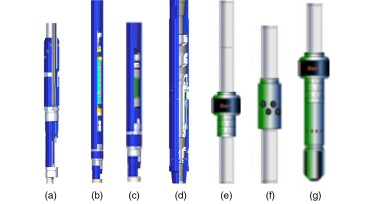
 This study illustrates how a combination of a straddle-packer system and a downhole real-time telemetry successfully stimulated up to 38 stages while maintaining packer-seal integrity and downhole pressure.
 -
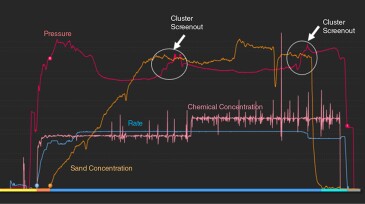
This paper presents an integrated system for fracturing optimization using real-time and historical data along with organizational knowledge and the challenges and key considerations of implementing such a system.
-
This paper describes the analysis of actual performance data for acid fracturing in a tight carbonate formation to investigate the ineffectiveness of the process.
-
The authors of this paper describe an underbalanced coiled-tubing drilling campaign in the operator’s onshore fields using a closed-loop system design.
-
The authors describe a casing-leak-repair alternative to allow continued hydraulic fracturing of an unconventional formation.
-
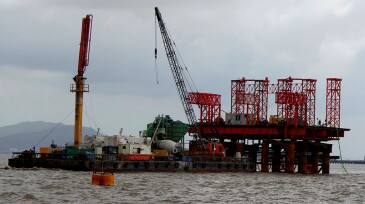
The authors describe coiled tubing operations that used a riser on a monohulled vessel already performing riserless interventions.
-
In this paper, a comparison is presented of the range of production outcomes for Clair Phase 1 and Clair Ridge, including the potential downsides of relying on natural fractures.
-
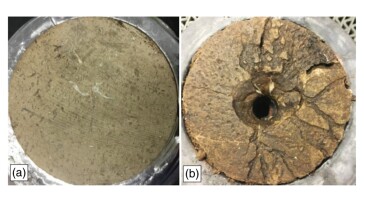
This paper presents a novel mathematical model for design and evaluation of fluoroboric acid treatments that takes into account the chemical kinetics and equilibrium aspects of important reactions and fluid flow inside the reservoir rock.
-
Coiled tubing has a key role to play, with strong arguments for itself: It is used throughout the life of a well, from exploration to abandonment, and its flexibility of use, combined with recent technology developments in pipe materials, real-time downhole telemetry, and specialized downhole tools—just to name a few—opens avenues to perform in a rigless manner many o…
-
The first acid job dates to 1895. Challenges remain, however, when it comes to lithology, coverage, penetration, and management of reaction products. These themes remain a focus for stimulation engineers.