Petroleum reserves

Since the US arrested and removed Venezuelan President Nicolás Maduro on 3 January 2026, all eyes have turned toward the country’s vast oil reserves, the largest of any country. From 2005 to 2024, oil production in Venezuela fell by 70%, from 3.1 million B/D to just 0.9 million B/D. The race is on to bring production back, but aging infrastructure and expatriation pre…

The three featured papers illustrate how emerging computational methods—ranging from gradient-based optimization to data-driven proxies—are reshaping reservoir characterization, uncertainty assessment, and real-time decision support across diverse subsurface applications.

Latest 5-year assessment puts undiscovered technically recoverable gas resources on the US Outer Continental Shelf at 218 Tcf.
-
 Operator Talos Energy now believes Zama’s gross recoverable resource lies in the upper half of its pre-appraisal estimate of 400–800 million BOE. The consortium is working toward a 2020 final investment decision on the project.
 -
Ranking places US ahead of Saudi Arabia and Russia.
-
The state-run offshore company has found a gas and condensate field that holds an estimated 250 million BOE.
-
Production and proved reserves in the Permian Basin’s Wolfcamp Shale and Bone Spring Formation are reaching new heights, and a new assessment from the US Geological Survey indicates the industry is just scratching the subsurface when it comes to what may be technically recoverable.
-
Proved oil and gas reserves in the US have spiked to levels not seen before, the EIA reports, and one of the main drivers is the Permian’s Wolfcamp-Bone Spring Shale.
-
Since its publication in 2007, the SPE Petroleum Resources Management System (PRMS) has been broadly adopted by the petroleum industry as the international standard reference for reserves and resources classification and reporting.
-
An international committee of reserves evaluation experts has completed the revision of the Petroleum Resources Management System (PRMS). The SPE Board approved it in June 2018.
-
Oil and gas demand is stable or rising in all regions of the world, meaning additional investments are needed for production to keep up. Growing indigenous requirements reduce volumes available for export in many regions, IOGP’s new Global Production Report shows.
-
Big-data mining techniques can help determe the type-curves and the resulting estimated ultimate recovery of an asset being evaluated for acquisition.
-
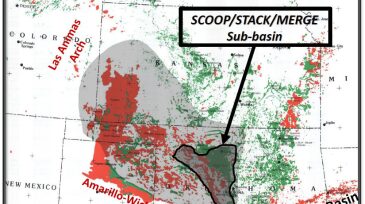
Producers in Oklahoma’s newly opened Merge play are sitting atop a resource that rivals some major world gas fields and discoveries, Citizen Energy’s Geology CEO Greg Augsburger told the SPE Gulf Coast Section Business Development Group recently.