Reservoir

This article from the SPE Integrated Reservoir Management Technical Section (IRMTS) addresses decision timing across the reservoir cycle.
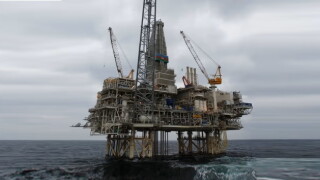
BP said it expects to keep the Azeri-Chirag-Gunashli (ACG) project in production into the 2040s by tapping into separate nonassociated gas reservoirs.

Xu outlines the thinking and theories that led his team to six world-class oil discoveries that total more than 100 million tons of proven geological reserves since 2021.
-
 In this study, forward simulation is executed by a commercial reservoir simulator while external code is developed for backward calculations.
 -
Findings from two new SPE papers argue that the tight-rock sector needs to rethink longstanding assumptions about how hydraulic fractures form underground.
-
In this study, the authors propose the use of a deep-learning reduced-order surrogate model that can lower computational costs significantly while still maintaining high accuracy for data assimilation or history-matching problems.
-
This paper demonstrates the effectiveness of integrating dynamic gas separation with existing gas-avoidance methods within the same electrical submersible pump string to address these issues.
-
The newest recipient of the title SPE Legend of Hydraulic Fracturing talks about his career, the evolution of fracture stimulation, the development of increasingly useful simulators, and the future of the oil and gas industry. The honor was given at the 2026 SPE Hydraulic Fracturing Technology Conference and Exhibition.
-
The operator developed a solution that has kept the well at stable production for over a year after treatment.
-
The rise in China’s gas production, now exceeding that of Qatar and of Australia, is also limiting growth in its LNG demand.
-
The project with ExxonMobil used closed-loop drilling and digital well-construction technologies.
-
Smart Seismic Solutions plans to use 50,000 nodes to examine storage potential for the Greenstore CCS project.
-
Latest 5-year assessment puts undiscovered technically recoverable gas resources on the US Outer Continental Shelf at 218 Tcf.