Well integrity/control

This paper describes the evolution of the operator’s initial PWC (perforate, wash, and cement) abandonment projects performed in deepwater Brazil.

The authors reach conclusions that the industry should define a standard testing method to improve swelling performance, including validation of repeatability, to complement existing guidelines.

This paper presents the development of an advanced simulation tool aimed at providing a better understanding of the complex fluid-displacement phenomena present in well-cementing processes.
-
 The North field offshore Qatar was observed to have a chance of inner annuli becoming charged with shallow-gas pressure with possible communication to other annuli, which was thought to be a well integrity concern.
 -
Despite multitier safeguards, blowouts occur. When such accidents happen, rate estimation is an important and daunting task.
-
Australian technology developer MezurX is touting its newly introduced flow, density, and mud monitoring system as a significantly better alternative to the widely used Coriolis meter.
-
As deeper and more complex well designs proliferate throughout oil and gas fields, well completion methods are challenged and new technologies are emerging to ensure safe, cost-efficient, and optimized completions.
-
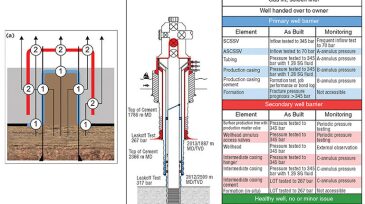
Well integrity and well barriers have been part of the exploitation for oil and gas for nearly a century, with the introduction of the blowout preventer (BOP) in the 1920s.
-
Well control training programs for deepwater drillers and key rig personnel are undergoing a major overhaul that has been years in the making.
-
More precise measurement can create a dilemma. One example is the precise fluid flow measurements used to control managed pressure drilling (MPD) systems.
-
After the 2010 subsea blowout of the Macondo well that resulted in 11 deaths and the worst oil spill in US history, early kick detection technology found itself at the top of the wish list for regulators and offshore companies seeking to avoid similar accidents.
-
Offshore drillers have been battered by the plunge in oil prices with falling day rates and a growing number of older rigs headed for demolition.
-
This paper describes thermal modeling and its combination with drilling-fluid analysis to reveal concealed changes in well conditions during various drilling and completion operations.