Production

In the fourth development phase, a planned tieback would connect resources from two North Sea discoveries to existing infrastructure at the Johan Sverdrup field, pending project sanction.
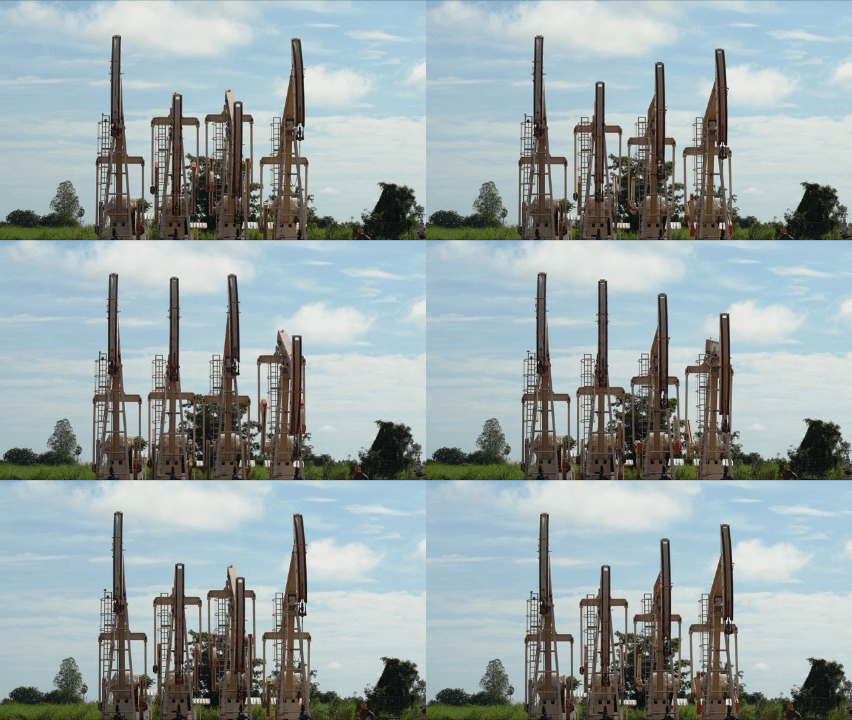
This paper proposes a novel, real-time pump failure prediction method using machine learning with scaled load ratio to accurately predict pump failures using only surface pump load data.

Five agreements target more than 11 Tcf of offshore gas and include flare-reduction technology.
-
 Rigless coiled-tubing-unit (CTU) interventions can be effective in returning to production wells that have lost electrical-submersible-pump (ESP) efficiency because of organic, inorganic, or mixed scale deposits.
 -
Calcium sulfate (CaSO4) in the form of gypsum and anhydrite is one of the more prevalent evaporite minerals typically found in the carbonate rocks of the western Canadian sedimentary basin (WCSB).
-
The removal of mineral scale in the oil field is typically perceived as a somewhat nonscientific discipline.
-
Sour gas is being produced from a number of carbon-steel-completed wells in the US, Canada, France, and Saudi Arabia.
-
This work introduces sodium gluconate as an efficient and environmentally friendly iron-chelating agent.
-
The recent plunge in oil prices has reinforced a number of truths about our industry.
-
Field X consists of 17 scattered clusters of more than 100 oil wells producing from different reservoirs.
-
This paper focuses on analysis of beam-pump-failure root causes and trends and how the operator has used these data combined with automated equipment to reduce failure frequency and operating cost.
-
One thing this cycle has in common with all of the other down cycles the industry has been through is that most companies ignore the opportunities a down cycle presents.
-
A production-optimization strategy of an artificial-lift system resulted in the mitigation of challenges related to reservoir heterogeneities and completion design.