Completions

Chevron and Halliburton describe how they built and deployed the fully autonomous closed-loop fracturing system that enables subsurface-driven optimization.
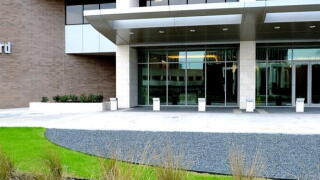
Weatherford CEO Girish K. Saligram said the acquisition will bolster Weatherford’s completions offerings and unconventional reservoir capabilities.

Each of these papers presented at SPE conferences exemplifies the continued progress of industry solutions to maximize commercial value of basins within ever-changing oil and gas dynamics.
-
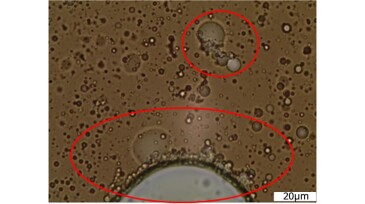
 The authors of this paper study the effect of solids particles on oil/water separators and on produced-water treatment.
 -
The advances presented in the selected papers, and many others, would not be possible without improvements in our understanding of materials, how to protect coiled tubing pipes, how to get the best performance out of them under downhole conditions that are becoming every day more extreme, and how to preserve wellbore completion at the same time.
-
Fracture monitoring to optimize fluid volumes and designs remains a critical area of development. Research is ongoing with the focus on combining different monitoring technologies including tracers, fiber optics, downhole cameras, and microseismic monitoring.
-
Engineers desperately need an alternative to acid placement through pipe, coiled tubing, or bullheading. For example, propellants have been around for years; however, their performance has not quite met the hype. Nevertheless, several case histories have been authored to suggest their efficacy; historically, some treatments have even been wildly successful.
-
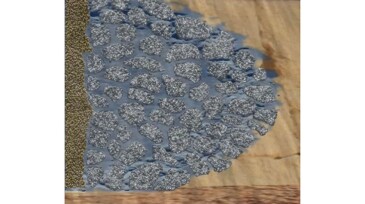
This paper describes a hydraulic fracturing pilot project using a technique that generates higher fracture conductivity to reduce the drawdown during production and improve connection through laminations.
-
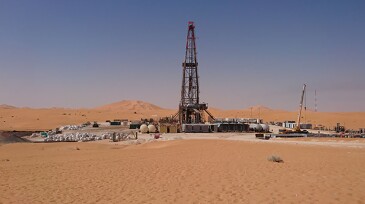
This paper presents a case study of a North African oil field producing from two Ordovician sands with differing permeabilities where significant benefit was achieved by fracture stimulating one or both intervals in two wells.
-
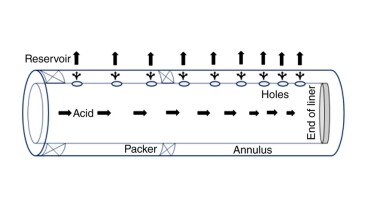
This paper describes the stimulation of a horizontal water-injection well with a limited-entry-liner completion in an onshore carbonate reservoir using a large volume of viscoelastic diverter-acid fluid system ahead of the main acid stage.
-
This paper details a successful pilot to improve long-term well performance using acid stimulation aided by a tailored metal oxide nanoparticle-based fluid in the Wolfcamp A formation.
-
This study highlights the strategic implementation of coiled tubing to convey perforating guns in extended-reach wells, overcoming the lockup effect through the deployment of downhole tractors and real-time monitoring tools.
-
This study emphasizes the vital need to evaluate well conditions and working-fluid compatibility with coiled tubing materials to prolong coiled tubing operational life.