

Flow assurance

Flow measurement touches almost every phase of oil and gas operations. Yet the industry still struggles to distinguish between what is directly measured, what is inferred, and what is estimated through models, correlations, or assumptions. That distinction matters. A measurement does not need to be perfect to be useful, but it must be fit for purpose.

This paper presents an engineering solution tailored for shallow-water oilfield development in Bohai Bay, addressing the confluence of spatial constraints, marginal economics, and environmental conditions that have rendered such reserves stranded.

This paper details the design and implementation of a subsea multiphase pump solution deployed in the Atlanta field designed to maximize reuse of existing subsea and topside equipment.
-
 This paper describes the successful deployment of flexible coiled tubing technology in an oil-producing well of the offshore Frade field in Brazil’s Campos Basin.
 -
This case study from Italian technology developer Sentris highlights the effectiveness of using sensors during pigging operations to optimize cleaning efficiency.
-
The objective of this study is to field test a non-nuclear multiphase flowmeter and assess its performance under challenging operating conditions.
-
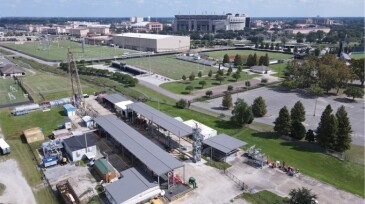
For more than a century, LSU has shaped petroleum engineering education, but few assets showcase its impact like the PERTT Lab. With six deep test wells and rare reservoir-depth gas-injection capabilities, the facility is helping drive breakthroughs in well control, carbon-dioxide injection, and next-generation energy technologies.
-
Experience in subsurface production and lift design is shaping a new generation of geothermal operations built for reliability and scalability.
-
The research facility said it plans to add multiphase-flow-testing capabilities for heavy oil and different viscosities.
-
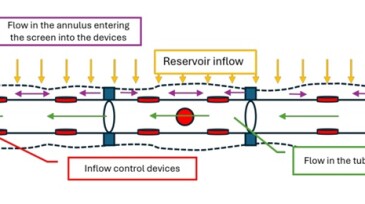
This paper compares various drainage strategies and well completion configurations on the installation of inflow control technology by considering energy efficiency.
-
A new tubing-conveyed tool combines wellbore cleanout with multi-tracer deployment for production diagnostics and reservoir monitoring.
-
This paper explains that the discovery of specific pressure trends, combined with an unconventional approach for analyzing gas compositional data, enables the detection and prediction of paraffin deposition at pad level and in the gathering system.
-
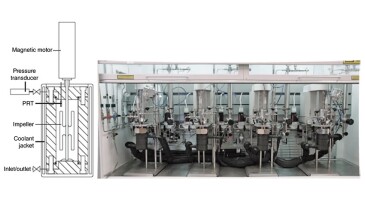
This paper presents an approach to subsea hydrate-risk management based on the understanding that some crudes have induction properties that delay hydrate formation even when the pressure and temperature conditions reach the hydrate thermodynamic region.





Page 1 of 16